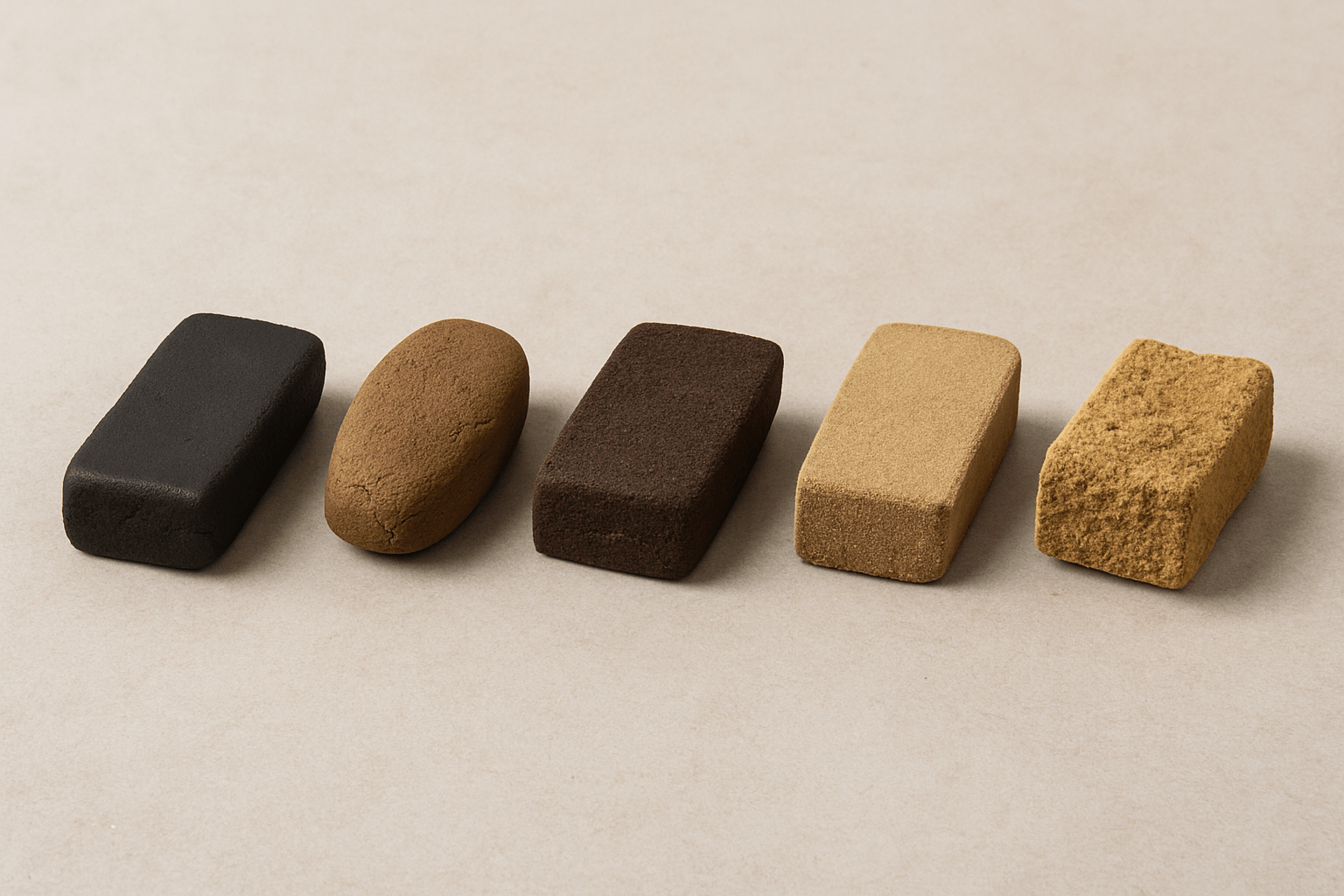
Discovering Bubble Hash: Equipment and Yield
Introduction
Bubble Hash, sometimes called “Ice-O-Lator” or “water hash,” is gaining increasing interest among CBD enthusiasts in Switzerland. Unlike extraction methods that use chemical solvents (butane, supercritical CO₂, etc.), Bubble Hash relies on the action of ice water and fine mesh filters to separate trichomes (resin glands) from the rest of the plant. The result is a product of great purity, appreciated for its high content of cannabinoids and terpenes.
In Switzerland, the production and commercialization of hemp-derived products must comply with current legislation, notably the Federal Act on Narcotics and Psychotropic Substances (LStup, RS 812.121) and its implementing ordinances. Hemp (Cannabis sativa L.) is legally permitted if it contains less than 1% THC (according to Article 2(1) of the Hemp Ordinance of January 1, 2021). Thus, CBD Bubble Hash produced from hemp plants respecting this THC threshold is legally authorized, provided that other legal requirements (traceability, compliance, absence of contamination, etc.) are met.
In this article, you will discover in detail the equipment necessary for making Bubble Hash, the different production steps, and objective information about its yield. We will rely on official Swiss or European sources for each factual piece of information, such as Swiss legislation and scientific or institutional publications on the subject. We will also see how Bubble Hash production can be a technical challenge, although relatively accessible to producers seeking a natural extraction method without chemical additives.
What is Bubble Hash?
Bubble Hash is a cannabis concentrate obtained through ice water extraction. This method relies on the near-zero solubility of resin glands (trichomes) in water. The low temperature of the water facilitates the detachment of trichomes from the plant material. The resin glands are then collected using filter bags with different mesh sizes, commonly called “bubble bags.” Each mesh retains a particular range of trichome sizes, allowing for the separation of different resin qualities.
According to a report by the European Monitoring Centre for Drugs and Drug Addiction (EMCDDA) on cannabis resin extraction techniques (cannabis resin technical report, 2020), Bubble Hash can preserve a wide spectrum of cannabinoids and terpenes. This preservation is particularly sought after in the context of CBD, where the THC concentration must remain very low (less than 1% in Switzerland) to comply with regulations while maximizing the content of cannabidiol and other beneficial compounds.
Essential Equipment
To produce Bubble Hash, a minimum of equipment is required. Here are the main necessary elements:
-
Bubble bags
Bubble bags are filter bags made of nylon or similar materials, with meshes of different microns (e.g., 220, 160, 120, 90, 73, 45, 25 microns). Each bag will retain certain sizes of trichomes and a certain amount of plant material. The smaller the micron, the higher the potential quality of the resin inside the bag, as it mainly retains trichome heads with minimal impurities. -
Mixing bucket or tank
A sufficiently large container is essential to hold the ice, water, and chopped plant material. Depending on the amount of plants to be processed, you can opt for a bucket (with a typical volume of 20 to 25 liters) or a larger tank. -
Ice and very cold water
Low temperature is one of the key factors for the success of the technique. Water between 0 and 4 °C facilitates the detachment of resin glands while limiting the extraction of unwanted materials (leaves, chlorophyll). The use of large quantities of crushed ice (or ice cubes) helps maintain this stable temperature throughout the process. -
Kitchen thermometer
Controlling the water temperature is essential to optimize trichome separation. A simple kitchen thermometer generally suffices. -
Manual or electric mixer
To stir the plant material in ice water, a mixer (such as a hand whisk or low-speed electric beater) helps detach the trichomes without overly breaking up the plant material. -
Strainer or sieve
Before filtering the solution through the different mesh bags, a strainer can be used to remove the bulk of plant residues and other debris. -
Spatula or spoon
To collect the resin once it is filtered, it is preferable to use a spatula or spoon made of plastic or stainless steel. -
Drying surface (sieve or paper)
After extraction, the resin must be drained and dried. Some producers use fine sieves to speed up the drying process. Others prefer to spread the resin on non-stick paper and turn it regularly.
Production Steps
The production of Bubble Hash involves a series of precise steps. Here is a summary of the process in seven points:
-
Preparation of the raw material
Select hemp flowers rich in CBD (and respecting the legal THC threshold < 1%). It is preferable to use slightly dried flowers, not ground too finely. Cutting into small pieces still optimizes the contact surface with the ice water. -
Initial cooling
Place the plant material in the freezer for about 30 minutes to 1 hour to lower the temperature of the buds. This step is optional but can facilitate the initial detachment of trichomes. -
Setting up the filter bags
In order, insert your bags into the bucket: start with the finest mesh bag at the bottom and finish with the largest mesh bag on top. Thus, the solution will pass through the coarsest filter last, facilitating the collection of different resin grades. -
Mixing and agitation
Fill the bucket with ice water and crushed ice, then add the cooled plant material. Stir gently for 10 to 15 minutes, ensuring the temperature remains between 0 and 4 °C. Avoid too vigorous agitation to prevent overly grinding the plants. -
Filtration
Gradually remove and drain each bag, from the coarsest to the finest. Each bag will contain more or less pure resin. It is recommended to gently rinse the resin with cold water (always around 0 °C) to remove any plant residue. -
Resin collection
Using a spatula, collect the resin from the inner surface of the bag. Place it on a sieve or parchment paper to drain it. -
Drying and finishing
The resin thus obtained must dry for several days in a cool, well-ventilated place to prevent any risk of mold. Some producers slightly crumble the resin on a sieve to speed up drying. In the end, you obtain Bubble Hash often divided into several grades of purity, depending on the mesh of the bags.
Yield: What Does the Literature Say?
One of the recurring questions concerns the return rate (yield) during Bubble Hash production. According to a technical document from the EMCDDA (2020) on cannabis resin production, the ice water method generally allows a yield ranging from 10% to 20% of the initial dry plant mass. For example, if you process 100 g of hemp flowers, you might expect to recover between 10 and 20 g of resin, depending on the quality of the raw material, the proportion of trichomes, and the efficiency of the agitation/filtration.
However, it is important to note that in the context of CBD, the THC concentration being very low, the distribution and density of resin glands may vary if the variety is selected more specifically for cannabidiol. Some industrial hemp varieties, authorized in Switzerland, naturally produce less resin or less dense buds than high-THC varieties. Consequently, Bubble Hash yields can sometimes be lower than those obtained with traditional high-THC varieties (source: Federal Office of Public Health, Hemp and Derivatives Section, 2021).
Moreover, the way the raw material has been cultivated, dried, stored, and handled directly influences the proportion of trichomes present. Indoor cultivation techniques can result in higher resin rates, at the cost of controlled growth conditions (lighting, temperature, humidity). Conversely, outdoor cultivation, exposed to climatic variations, can lead to resin of variable quality.
Factors Influencing Quality and Taste
In addition to cannabinoid levels, the aroma and flavor of Bubble Hash are greatly influenced by its terpene content. Terpenes are volatile molecules responsible for the characteristic scents and flavors of cannabis (myrcene, limonene, pinene, etc.). Well-made Bubble Hash can retain a significant portion of these terpenes, as there is no significant heating step or chemical solvents likely to alter the aromatic profile.
The quality of the water used, the extraction temperature, and the speed of the drying process also play a role. Good quality water (low mineral content or pollution) helps reduce contamination risks. This aspect is often emphasized in the recommendations of the Federal Office of Public Health (FOPH), which highlights the importance of rigorous hygiene for any hemp product handling intended for consumption.
Maintenance and Reuse of Equipment
Filter bags (bubble bags) are reusable, provided they are carefully cleaned after each session. Resin residues can accumulate in the mesh, compromising the purity of subsequent extractions and potentially affecting yield. Cleaning with hot water, possibly with a mild detergent, followed by thorough drying, is recommended by most filter bag manufacturers.
Also, regularly inspect the condition of the mesh. Damaged meshes (tears, irregularities) can hinder particle separation and lead to mixing of different resin grades. For quality and ventilation purposes, store your bubble bags in a dry, dust-free place to avoid contaminating the meshes before their next use.
Legal Control in Switzerland
In Switzerland, hemp and its derivatives (including CBD Bubble Hash) are authorized for commercialization, provided they comply with the maximum THC limit of 1%. It is therefore essential for any producer or retailer to have laboratory analyses conducted to assess cannabinoid content. These analyses can be performed in accredited laboratories, which will verify product compliance and issue a certificate for sale or export.
If the THC concentration exceeds the legal limit, the product may be considered a narcotic under the LStup and thus subject to strict restrictions. According to the Federal Office of Public Health, compliance with the 1% THC limit, combined with complete traceability (where the plants come from, how they were cultivated, whether they are pesticide-free, etc.), forms the basis of the Swiss legal framework for CBD. It is also important to specify the different cannabinoid levels on the label, as well as information about the product’s origin, to properly inform consumers.
Advantages and Disadvantages of Bubble Hash
Advantages
- Absence of chemical solvents: The ice water method does not require the use of potentially dangerous solvents, such as butane or ethanol. Therefore, Bubble Hash is considered more “natural” and better at preserving terpenes.
- Relative purity: When the technique is well-mastered, the final product contains very little plant material, thus preserving the most valuable cannabinoids and terpenes.
- Compliance with Swiss standards: As long as the hemp used respects the THC threshold < 1%, Bubble Hash production falls within a legal framework, reassuring consumers and producers.
Disadvantages
- Variable yield: As we have seen, the recovery rate depends on many factors (strain, cultivation conditions, extraction protocol). The result can sometimes be disappointing if the raw material is not suitable.
- Relatively long process: From preparation to filtration through careful drying, the process requires time and patience. One cannot improvise a Bubble Hash in a few minutes.
- Cost of equipment: Purchasing quality filter bags (several different microns), large buckets, and an appropriate mixer can represent a significant initial investment.
Storage Tips
Bubble Hash is a concentrate that, if properly dried and stored, can keep for several months without significantly losing aroma or cannabinoids. To best preserve the quality of your product:
- Use airtight containers: An opaque glass jar or metal container protects your Bubble Hash from air, light, and moisture.
- Store it away from heat: Terpenes are sensitive to high temperatures, which can alter their aromatic profile. A cool (around 15 to 20 °C) and dark place is ideal.
- Avoid temperature fluctuations: Sudden temperature changes can cause condensation, which can promote the growth of mold or microorganisms.
- Handle with care: Handling it too often or too vigorously can lead to a loss of trichomes (resin glands become brittle) and thus effectiveness.
Current Trends and Future Prospects
As the demand for CBD products continues to grow in Switzerland, Bubble Hash is emerging as a popular alternative for consumers seeking a concentrated cannabinoid product while remaining below the legal 1% THC limit. According to some extraction equipment manufacturers, innovation is focusing on the motorization and automation of the mixing phase to reduce labor and improve yield consistency. “Bubble Machine” systems are beginning to appear, incorporating specific programs to control agitation speed and duration.
Moreover, research on hemp varieties with high CBD content but below the 1% THC threshold is intensifying. Breeders are striving to stabilize plant lines that produce trichome-rich buds, even if THC remains low. This trend could, in the long term, improve Bubble Hash yields, ensuring better retention of CBD and terpenes. However, the inherent delays in varietal selection and the approval procedures in Switzerland (seed certification) mean that these advances will be implemented gradually.
Conclusion
Bubble Hash offers a natural approach to hemp resin extraction, using only water and ice. This method, appreciated for its purity and aroma, highlights the trichomes and thus the richness in cannabinoids and terpenes. In Switzerland, the legal context around CBD allows this concentrate to develop, provided the < 1% THC threshold is strictly respected and current hygiene standards are followed.
To achieve good Bubble Hash, the quality of the raw material, extraction temperature, and appropriate agitation are three major factors. The filtration equipment must be meticulously selected and maintained, while drying under good conditions ensures long-term product preservation. Finally, the yield between 10% and 20% mentioned by the EMCDDA should only be considered an estimate: each hemp strain, each climate, each production step can influence the results.
Due to its initial equipment cost, technicality, and time required, Bubble Hash remains a product that is both sought after and demanding. It is ideal for passionate concentrate enthusiasts, keen to benefit from the aromatic integrity of hemp and a high CBD content. Given the growing interest in more “clean” and legal methods, it is likely that Bubble Hash will continue to gain popularity in the Swiss market, supported by innovations that enhance its quality and consistency.