Cooking Salt Infused with CBD Hash + Herbs
Introduction
Cooking salt infused with CBD Hash and herbs is an original culinary product gaining popularity among legal hemp enthusiasts. In Switzerland, the cultivation and consumption of CBD-based products are allowed under certain legal conditions, particularly adhering to the maximum THC (tetrahydrocannabinol) level. The idea of infusing salt with CBD Hash primarily aims to bring a distinctive aroma and a unique taste experience to many recipes while complying with Swiss regulations.
In this article, we will explore the legal context of CBD Hash in Switzerland, the composition and characteristics of CBD Hash, the steps for preparing and infusing the salt, as well as methods for preserving and using this preparation in cooking. Every piece of information presented is fact-checked and supported by official Swiss sources or recognized scientific studies to ensure reliable and quality content.
The Legal Framework in Switzerland
Before discussing recipes, it is essential to review Swiss legislation. According to the Federal Office of Public Health (FOPH), the cultivation and commercialization of products containing CBD (cannabidiol) are allowed when the THC level does not exceed 1% in Switzerland [Source: Ordinance on the Control of Narcotics (OCStup), RS 812.121.11]. Beyond this threshold, products are considered narcotics and fall under the corresponding legislation.
CBD Hash is a product derived from the resin of legal hemp. As long as the THC level remains below or equal to 1%, it can be sold and consumed in Switzerland. However, it is recommended to regularly verify, through an independent laboratory report, the actual THC and CBD content of your raw materials to comply with current standards. This precaution ensures not only the legal compliance of the product but also its safety of use.
Moreover, the production of foodstuffs containing hemp must comply with the food safety rules imposed by the authorities. It is therefore recommended to verify in advance that your CBD Hash has undergone microbiological and chemical analyses, certifying its sanitary quality (pesticides, heavy metals, etc.).
What is CBD Hash?
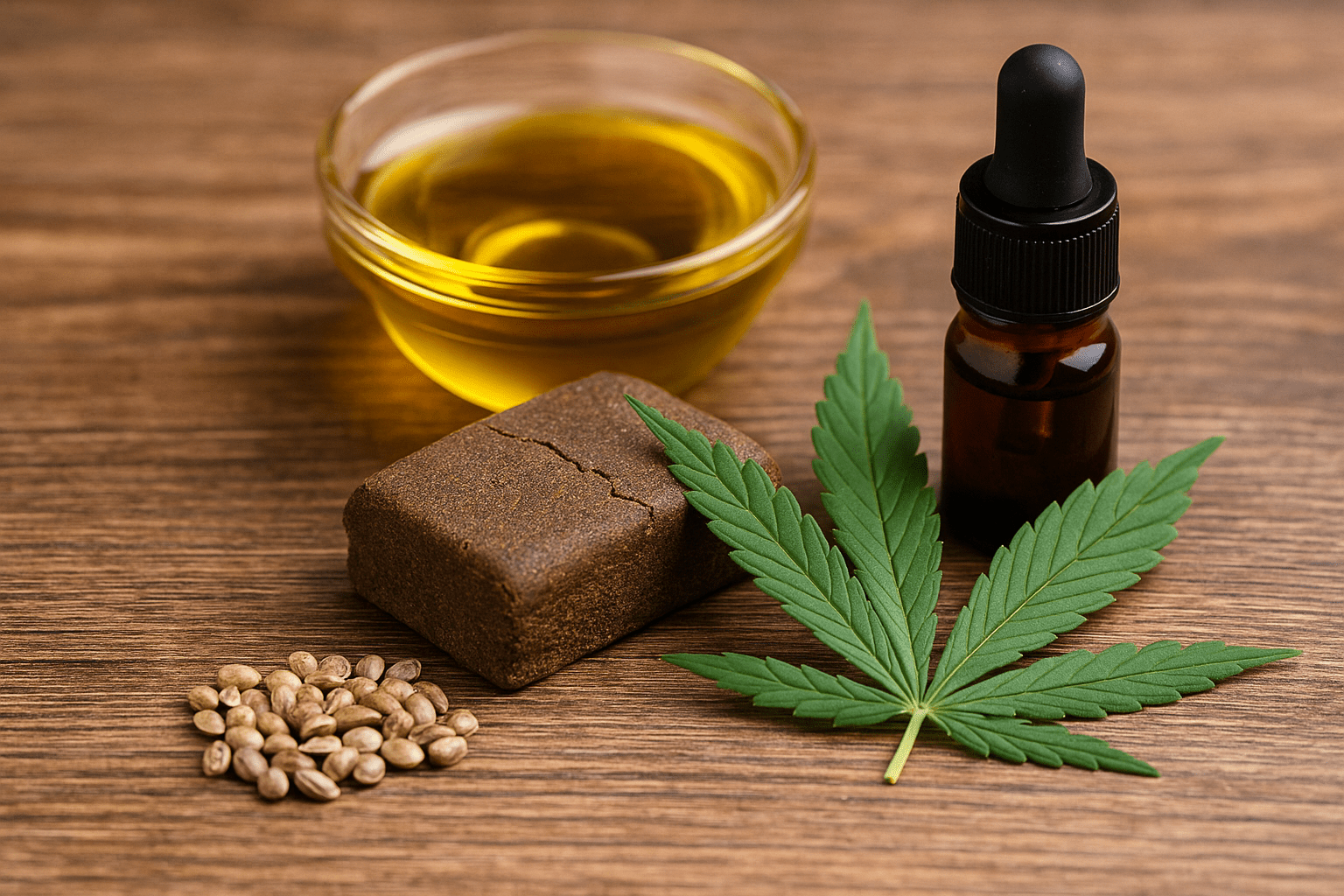
CBD Hash is a resin concentrate obtained from hemp plants with low THC content and high cannabidiol content. To extract this resin, trichomes (tiny resinous glands present on the plant) are first separated before being pressed and compacted to form a brown, green, or sometimes golden block.
Unlike traditional hash, which is mostly rich in THC, CBD Hash focuses on cannabidiol concentration. According to the World Health Organization (WHO), CBD does not present abuse potential and is generally well tolerated in humans [Source: World Health Organization. (2017). “Cannabidiol (CBD) Pre-Review Report”]. However, it is important to remember that even though CBD does not cause a marked psychotropic effect, the presence of other cannabinoids may have a slight relaxing effect, which can vary significantly from person to person.
CBD Hash can be used in various ways, such as vaporization or infusion in food preparations. Its use in cooking requires precision, particularly to ensure consistent dosing and harmonious taste in dishes. Infusing it into salt is a simple way to evenly distribute the active compounds of CBD Hash, as salt acts as an ideal medium to convey flavors and substances in a dish.
Why Infuse Salt with CBD Hash?
A Taste Advantage
The interest in infusing salt with CBD Hash and herbs is primarily culinary. Salty preparations are among the easiest to flavor with hemp extracts, as salt serves as a base in almost all world cuisines. Adding CBD Hash imparts a subtle taste, sometimes reminiscent of earthy or vegetal notes, which pair well with herbs like rosemary, thyme, or sage.
Potential Benefits of CBD
While much research focuses on the potential properties of CBD, it is important to emphasize that no medical virtues can be claimed without solid and verified scientific references. According to a meta-analysis published in the journal Cannabis and Cannabinoid Research (2019), CBD might be associated with certain relaxing properties. However, these studies should be taken with caution, and it should be noted that the CBD Hash used in the salt is not a medicine but a culinary ingredient. For more in-depth medical questions, it is recommended to consult a healthcare professional.
Originality and Customization
From a gastronomic perspective, CBD Hash-infused salt represents a creative and customizable alternative to enhance the flavor of your dishes. Whether you are fond of Mediterranean, exotic, or traditional recipes, CBD infusion can adapt to different types of preparation thanks to a common salty base. You can thus pair CBD Hash with specific aromatic herbs to enhance meats, fish, vegetables, or even salads.
Selecting Ingredients and Equipment
To make cooking salt infused with CBD Hash and herbs, it is important to ensure the quality of each ingredient:
-
Salt: Opt for high-quality salt, preferably gray Guérande salt or pink Himalayan salt. These types of salt are rich in minerals and provide a solid base for a homogeneous infusion.
-
CBD Hash: Choose a hash with a THC level below 1% (in accordance with Swiss regulations) and whose laboratory report shows no contaminants. The CBD level varies depending on the batches and varieties, so make sure to select a product suited to your taste preferences and needs.
-
Aromatic Herbs: Thyme, rosemary, basil, oregano, sage, tarragon… The possibilities are numerous. Prefer dried herbs to facilitate incorporation into the salt and prolong the shelf life of your mixture. Also, ensure their freshness and quality (absence of mold, chemical residues).
-
Airtight Container: Prepare a clean and dry glass jar to store your infused salt away from moisture and light.
-
Temperature Setting (Optional): Some enthusiasts perform a slight decarboxylation of CBD Hash before incorporating it into the salt to optimize cannabidiol availability. This is a step you can undertake if you have solid knowledge in the matter.
Preparation Steps
Here is a step-by-step guide to preparing your cooking salt infused with CBD Hash and herbs. Always follow basic hygiene rules in the kitchen, and ensure all your materials are clean.
-
Weighing the CBD Hash: Determine the amount of CBD Hash you wish to incorporate into your salt. For example, if you are preparing 200 g of salt, you can opt for 1 to 2 g of CBD Hash. Adjust the dose according to your taste preferences and desired intensity.
-
Crumbling the Hash: Using clean gloves or a small spoon, crumble the CBD Hash into fine particles. This will allow for better distribution in the salt and a more homogeneous infusion.
-
Decarboxylation (Optional Step): Decarboxylation involves heating the CBD Hash at a controlled temperature (usually around 110 to 120 °C for 30 to 45 minutes). This step helps transform CBDA into active CBD. However, for purely gustatory use, some choose to skip it to preserve certain aromatic notes. If you decide to decarboxylate, place the crumbled CBD Hash on a baking sheet lined with parchment paper and monitor the oven temperature.
-
Mixing Salt and Herbs: During decarboxylation (or after crumbling the CBD Hash if you are not heating it), prepare a large salad bowl or bowl. Pour in the salt, then add the dried herbs (about one tablespoon for 200 g of salt, adjust according to your preference). Mix well to evenly distribute the herbs.
-
Incorporating the CBD Hash: When the CBD Hash is ready (crumbled or decarboxylated), gradually add it to the salt/herb mixture. Continue to stir gently so that the resin particles adhere properly to the salt.
-
Storage: Pour your preparation into an airtight glass jar, previously cleaned and well dried. Seal tightly and shake slightly to homogenize the mixture once more.
-
Resting Time: Ideally, let your infused salt rest between 24 and 72 hours before first use. This allows the aromas of CBD Hash and herbs to distribute more evenly.
Once this process is complete, your infused salt is ready to enhance your dishes with its subtle and original touch.
Preservation Methods
To best preserve your CBD Hash-infused salt, follow a few simple recommendations:
- Airtight Jar: Store your mixture in an airtight glass container to avoid prolonged contact with air and moisture. Rubber-sealed lids are particularly effective.
- Storage Away from Light: Direct light can alter the quality of CBD molecules. Therefore, keep your jar in a cupboard or dark drawer.
- Regular Check: Occasionally check the appearance and smell of your infused salt. If you notice unusual changes (mold, inappropriate odors), discard the mixture.
- Shelf Life: Generally, well-prepared salt can be stored for several months, or even more than a year, especially if the herbs are well dried and the jar is airtight. However, to maintain optimal flavor, it is advisable to use it within three to six months of preparation.
Culinary Use Ideas
Salads and Raw Vegetables
A simple pinch of this infused salt can be enough to enhance the taste of your salads, raw vegetables, or grilled vegetables. CBD Hash, paired with herbs like rosemary or oregano, is particularly suitable for Mediterranean assortments.
Marinades
You can also use this salt as a marinade base for your white meats, poultry, or fish. Mix your infused salt with olive oil and a few complementary spices (paprika, pepper, garlic powder), then let your food marinate for a few hours or overnight. The CBD will adhere better to the fat, and the cannabis flavor will remain subtle but appreciable.
Pasta, Risottos, and Stews
CBD Hash-infused salt can also enhance your pasta dishes, risottos, and stewed preparations. Add it at the end of cooking to preserve its characteristic taste. The herbal notes pair well with creamy or cheese-based sauces.
Baking
On a focaccia or homemade bread, you can lightly sprinkle your infused salt before baking. However, be careful not to exceed too high temperatures (beyond 160–170 °C), as the heat could degrade some of the CBD. Ideally, add it as a finishing touch, a few minutes before taking the dish out of the oven.
Exotic Dishes
For exotic recipes, such as curries or tagines, CBD Hash can bring a slight woody fragrance. In this case, favor suitable herbs (dried coriander, for example) to create a harmonious blend between typical spices and CBD salt.
Safety and Precautions
Although CBD is not classified as a narcotic as long as THC is < 1% in Switzerland, it is still important to observe a few precautions:
- Individual Dosage: Each person reacts differently to CBD. Start with small amounts, then adjust according to your feelings.
- Respect the Legal Framework: Ensure that your CBD Hash complies with Swiss standards (THC level ≤ 1%). If in doubt, request a laboratory analysis certificate.
- Coupling with Other Substances: Although rare, CBD can sometimes interact with certain medications. If you have questions, seek the advice of a healthcare professional.
- Food Compliance: Verify that the herbs, salt, and especially the CBD Hash you use meet current sanitary requirements.
Trends and Perspectives
The enthusiasm for CBD-based products is part of a broader trend of “cannabis gastronomy.” Chefs and creative cooking enthusiasts no longer hesitate to play with hemp resin to bring a touch of originality. In Switzerland, culinary workshops highlighting the aromatic properties of CBD Hash, as well as chocolates, oils, and other CBD condiments, are flourishing.
Studies are underway to more thoroughly evaluate the aroma and stability of cannabinoids when integrated into foods. Specialized laboratories, like some university institutes, are interested in the question of CBD bioavailability and its interaction with fats, alcohol, or sugar. These researches could contribute, in the near future, to optimizing food infusion methods and better recovery of beneficial compounds.
Conclusion
Cooking salt infused with CBD Hash and herbs represents a culinary innovation subtly combining taste and originality. Thanks to Swiss legislation allowing the use of low-THC hemp varieties (≤ 1%), it is possible to prepare at home a condiment that arouses curiosity and gustatory pleasure. By carefully selecting quality raw materials (salt, dried herbs, controlled CBD Hash), and following a few simple steps – crumbling the Hash, optional decarboxylation, mixing, and preservation – you will obtain a customizable and unique product.
Stay attentive to the legal framework and good food safety practices to fully enjoy this innovative seasoning. Between salads, marinades, exotic dishes, and revisited pastries, the possibilities are numerous. This new way of integrating CBD into cooking opens exciting prospects for all those who love to innovate and explore new taste horizons while remaining rooted in the Swiss culinary tradition, where the quality and traceability of ingredients are paramount. Enjoy your meal and happy experimenting.