Fruity Terpenes: Choosing a Summer CBD Hash
Introduction
CBD Hash is gaining increasing interest in Switzerland, driven by a growing demand for 100% legal products (less than 1% THC according to the Narcotics Ordinance, OStup, RS 812.121.0 [source: Federal Administration]). Among the different varieties of CBD Hash, fruity terpene profiles are often favored for their freshness and summer aromas. In this article, we will explore the world of fruity terpenes as found in legal CBD Hash, their organoleptic characteristics, the Swiss regulations governing them, and the quality criteria to check for selecting a CBD Hash suitable for the summer season.
What is a Fruity Terpene CBD Hash?
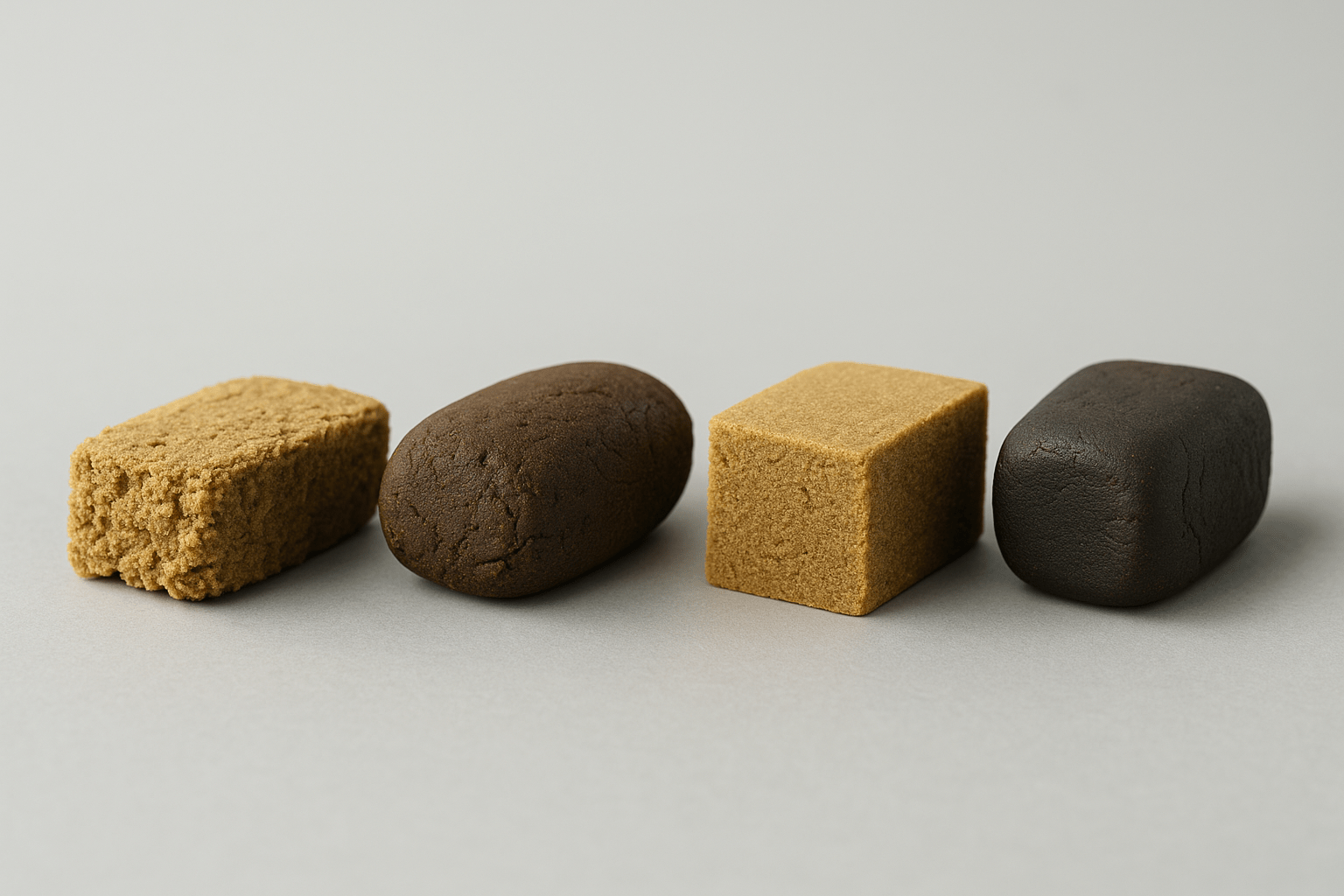
CBD Hash is a hemp resin concentrate rich in cannabidiol (CBD), the main non-psychoactive molecule of cannabis (according to the Federal Office of Public Health [FOPH], CBD does not cause a psychotropic effect). It comes from legal hemp plants authorized in Switzerland, with a THC content of less than 1% and grown according to strict standards. In this context, the “resinous part” of the hemp is collected, filtered, and then processed to obtain a final product packaged in more or less malleable blocks.
Terpenes, on the other hand, are aromatic compounds naturally present in all fragrant plants, including hemp. Their role in the plant includes protection against pests and the attraction of pollinating insects. They also give each cannabis variety a unique aromatic bouquet. Thus, fruity terpenes in a CBD Hash translate into notes of citrus, berries, tropical fruits, or sweet fruits, offering a sensory experience appreciated by enthusiasts.
Origin of Fruity Terpenes
Fruity terpenes are often influenced by a few dominant compounds:
- Myrcene: Often associated with earthy or musky notes, it can nevertheless produce slightly fruity nuances when combined with other terpenes.
- Limonene: Present in citrus fruits, limonene is responsible for lemony aromas and can be perceived as slightly sweet.
- Pinene: Usually imparts a pine scent, but when associated with other terpenes, it can help enhance certain fruity tones.
- Beta-caryophyllene: Mainly spicy or peppery, it plays a role in the overall complexity of the aroma and can balance or highlight the fruitier aspects.
These molecules sometimes act in synergy. According to a scientific review published in the British Journal of Pharmacology (E. B. Russo, 2011), the interaction called the “entourage effect” could optimize the expressiveness of cannabinoids and terpenes. Although studies continue to understand this synergy precisely, fans of fruity CBD Hash are often sensitive to these aromatic combinations.
Why Prefer a Fruity CBD Hash for Summer?
The summer period is often associated with lighter and refreshing tastes, whether for drinks, food, or even aromas. Thus, a CBD Hash with fruity terpenes fits into this logic, thanks to its light, sweet, or tangy notes and its more “energizing” sensory character.
- Pleasant in hot weather: During summer, we seek fresher and more digestible products. A fruity CBD Hash can contribute to this feeling of lightness, just like sun-drenched summer fruits or sorbets.
- Suitable for convivial moments: Legal hemp enthusiasts in Switzerland can, for example, consume their CBD Hash during a relaxing moment, at a barbecue with friends, or after a day of summer hiking.
- Less “heavy” olfactory profile: CBD Hash with overly earthy or spicy aromas may sometimes seem more suited to the cold season. Fruity terpenes bring a freshness that integrates better with long summer days.
Regulation and Quality: What Swiss Law Says
In Switzerland, the production and marketing of CBD Hash are strictly regulated. The Federal Office of Public Health (FOPH) and the Federal Office for Agriculture (FOAG) ensure compliance with specific criteria regarding the THC content of the final product. The Narcotics Ordinance (OStup, RS 812.121.0) stipulates that the THC level must remain below 1%. Serious producers regularly provide laboratory analyses to certify the compliance of their products.
Verify Authenticity and Composition in Accredited Laboratories
Regarding fruity aromas in CBD Hash, they can be natural (directly from the plant) or added through terpene concentrates extracted from hemp. In any case, it is important to verify:
- The complete analysis report: it should specify the cannabinoid content (CBD, THC, etc.) and, if possible, the terpenes.
- The extraction methods used: a transparent producer will often indicate whether they use gases, solvents, or mechanical processes (such as dry sieving or manual resin collection).
- The possible presence of contaminants: pesticides, heavy metals, or other chemical residues. A quality label or certification can be an additional safety guarantee.
These analyses are generally carried out by specialized, recognized, and accredited laboratories in Switzerland. The results not only legitimize the required THC level < 1% but also confirm compliance with health standards.
Focus on Key Fruity Terpenes
To choose a fruity CBD Hash well, it is useful to know the origin and description of some major terpenes. The information below is based on studies published in specialized scientific journals and analyses from reputable brands.
Limonene: Citrus Tones
- Aromas: lemon, orange, citrus zest.
- Origin: present in many hemp varieties and in citrus fruits (lemons, oranges, grapefruits).
- Particularity: according to several analyses, limonene is often perceived as light and refreshing, making it a natural choice for a summer CBD Hash.
Myrcene: Slightly Fruity Sweetness
- Aromas: earthy, musky, sometimes close to ripe mango.
- Origin: this terpene is found in hops, basil, and certain CBD-rich hemp varieties, where it can contribute to creating more discreet fruity notes.
- Particularity: although often associated with earthy notes, when combined with other terpenes, it imparts a roundness that highlights the natural sweetness of certain fruits.
Terpinolene: Floral and Sweet Scents
- Aromas: a mix of floral, fruity, and herbal notes.
- Origin: commonly present in sage and rosemary, but also in some cannabis varieties.
- Particularity: its aromatic palette can add floral and sweet complexity, relevant for fruity blends.
Beta-caryophyllene: A Spicy Touch in the Background
- Aromas: spicy, peppery, sometimes woody.
- Origin: found in black pepper, cloves, and most cannabis plants.
- Particularity: although less fruity in itself, this terpene often balances the overall blend and enhances the sweet sensation when mixed with other fruity terpenes.
How to Ensure the Quality of a Fruity CBD Hash?
1. Examine the Appearance
- Color: a quality fruity CBD Hash can display shades ranging from golden brown to dark brown, or even slightly reddish depending on the variety.
- Texture: too crumbly or too sticky? An appropriate texture for a CBD Hash is generally slightly malleable (neither too dry nor too moist).
2. Smell and Taste (when legally permitted)
- Aroma: immersing your nose in the product allows you to identify lemony, sweet, or exotic notes, indicative of a richness in fruity terpenes.
- Persistence in the mouth: a quality CBD Hash will often have a taste that lingers. The fruity notes, although discreet, should be present if highlighted.
3. Check the Brand’s Reputation
Before making a purchase, take the time to:
- Consult verified reviews: specialized platforms, forums, or well-known Swiss networks for collecting reliable customer feedback.
- Check if the brand provides laboratory analyses: a serious producer will make these resources available.
- Read the legal information: compliance with THC levels, information on cultivation, extraction methods, and possible certifications.
Different Terpene Extraction Methods
To obtain a truly fruity CBD Hash, two major approaches are often practiced by producers:
-
Natural Terpene Extraction:
- This involves isolating the terpenes naturally present in the hemp flower. Steam distillation or supercritical CO₂ extraction techniques allow collecting an essential oil rich in terpenes, which is then reintroduced into a concentrate (Hash or CBD distillate).
- This method provides a more subtle taste profile, respecting the plant’s original nature.
-
Addition of External Terpenes:
- Some producers add naturally sourced terpenes from other plants. Limonene extracted from lemon peels, for example, can intensify the lemony note of a CBD Hash.
- This practice is legal, provided it meets health standards and informs the consumer of the terpenes’ origin (hemp or external plants).
In either case, it is crucial to ensure that additives or added terpenes are pure, free of residual solvents or contaminants, and comply with current Swiss legislation.
Impact of the Cannabinoid Profile
Besides the CBD and THC levels, a CBD Hash may contain other legal cannabinoids such as CBG (cannabigerol) or CBC (cannabichromene). Although their content is generally much lower than CBD, their contribution to the overall product can influence the overall experience.
- CBG (cannabigerol): often considered “a cannabinoid with potential” by the scientific community, it could act in synergy with CBD and certain terpenes (study published in Frontiers in Neuroscience, 2018).
- CBC (cannabichromene): less studied, but which could also modulate the entourage effect.
For a fruity and summer-oriented CBD Hash, paying attention to these secondary cannabinoids can be interesting: when present in trace amounts, they can contribute to the product’s sensory complexity.
Storage of Fruity CBD Hash
To preserve the aromatic qualities of your CBD Hash, some storage precautions are necessary, especially during the summer:
- Temperature: terpenes are volatile and sensitive to heat. Storing your CBD Hash in a cool place, ideally between 15 and 20 °C, preserves its aromatic properties.
- Light: direct light accelerates the product’s aging and can degrade both terpenes and cannabinoids. An opaque jar or a cupboard away from light is preferable.
- Humidity: excess humidity can promote mold formation, while too dry air will dry out the resin, making it crumbly and altering the flavors. An area with stable humidity (about 55 to 62%) is ideal.
- Packaging: prefer an airtight container, such as a glass jar with silicone seals or a bag specifically designed for concentrate packaging.
Applying these storage rules will help you enjoy the fruity scent of your CBD Hash longer.
Popular Consumption Methods
In Switzerland, according to the law, the use of CBD Hash is regulated and must be done legally. Practices vary but are often described for informational purposes for adults with authorization, when necessary. Here are some common methods:
-
Vaporization:
- Vaporizers suitable for concentrates allow heating the CBD Hash to an ideal temperature (usually between 180 and 200 °C), thus releasing the fruity terpenes without combustion.
- This allows savoring the aromas without the potentially harmful by-products associated with combustion (source: FOPH, risk reduction report).
-
Infusion:
- Mix a small piece of CBD Hash in a tea or hot drink, with a fat (milk, coconut oil, etc.) to help extract the liposoluble cannabinoids.
- The fruity notes may be less perceptible in taste but sometimes offer a slight pleasant smell in the drink’s vapor.
-
Cooking:
- Some enthusiasts incorporate CBD Hash extracts into culinary preparations (pastries, sauces, etc.).
- Fruity terpenes can enhance the taste of certain recipes, especially desserts.
However, it is important to remember that in Switzerland, any health claim must be based on tangible evidence and remains limited by current regulations. CBD Hash should not be presented as a medication unless it complies with a strict framework (source: FOPH).
Trends and Innovations in Fruity CBD Hash
With the rising popularity of CBD products, brands are competing in creativity to offer ever more original variants:
- New hemp varieties: through the selection of genetics rich in limonene, myrcene, or other fruity terpenes.
- “Full spectrum” Hash: this approach aims to maintain all components (cannabinoids, terpenes, flavonoids) from the plant, for an aromatic profile as close as possible to raw hemp.
- Hash enriched with exotic fruit terpenes: aromatic technicians develop synergies between terpenes extracted from pineapple, mango, or other tropical fruits, to develop distinctly summer flavors.
These innovations are encouraged by a growing demand from consumers, but they must align with Swiss regulations and respect the authorized THC limit.
Precautions for Use
Although CBD is not considered a narcotic, certain precautions should be observed:
- Compliance with legislation: in Switzerland, the THC level must be verified (≤ 1%). Ensure your product is compliant and comes from legitimate sources.
- Drug interaction: if you are undergoing treatment, it is advisable to consult a healthcare professional before using CBD products (source: FOPH, cannabinoid report).
- Driving and safety: even though CBD itself is not psychoactive in the sense of a “high” effect, it is recommended to remain vigilant regarding the consumption of any product containing traces of THC, especially before driving a vehicle or using dangerous machinery.
- Quality and purity: prioritize producers who clearly display their analysis results.
Tips for Selecting a Summer Fruity CBD Hash
In summary, to enjoy a fruity CBD Hash during the summer:
- Choose a transparent producer: accessible analyses, clear extraction method, detailed origin of terpenes.
- Favor light flavors: if you are mainly looking for sweet or tangy notes, look for varieties known for their high limonene level or other fruity terpenes.
- Properly store the product: suitable storage preserves freshness and fragrance.
- Be informed about legality: ensure the product complies with the Swiss regulatory framework (THC < 1%).
Conclusion
CBD Hash with fruity terpenes perfectly embodies the spirit of summer, with its light notes, refreshing aroma, and compliance with Swiss standards (THC level < 1%). It comes in different shades, from lemony to sweet, thanks to the diversity of terpenes naturally present in hemp or added from other plant sources. Thanks to constant advances in the CBD field and rigorous control ensured by the FOPH and associated laboratories, it is now possible to select a high-quality product that is both legal and safe.
Whether you are attracted to a Hash naturally rich in limonene or an exotic variation enhanced with mango terpenes, it is essential to verify the producer’s seriousness and the transparency of their analyses. Properly stored, an ideal fruity CBD Hash for summer will enhance your summer relaxation moments while remaining compliant with regulations.
However, please keep in mind that CBD Hash is not a medication, and any therapeutic use requires the advice of a healthcare professional, as emphasized by the Federal Office of Public Health. Each person is unique and may react differently, which is why it is recommended to exercise moderation and seek information by consulting reliable sources, such as Swiss legal texts and peer-reviewed scientific studies (including the article by E. B. Russo, 2011, on the entourage effect).
Enjoy this season under the sign of fruity aromas, taking care to respect the legislation and the quality of the products you consume. Happy selection and have a great aromatic summer!