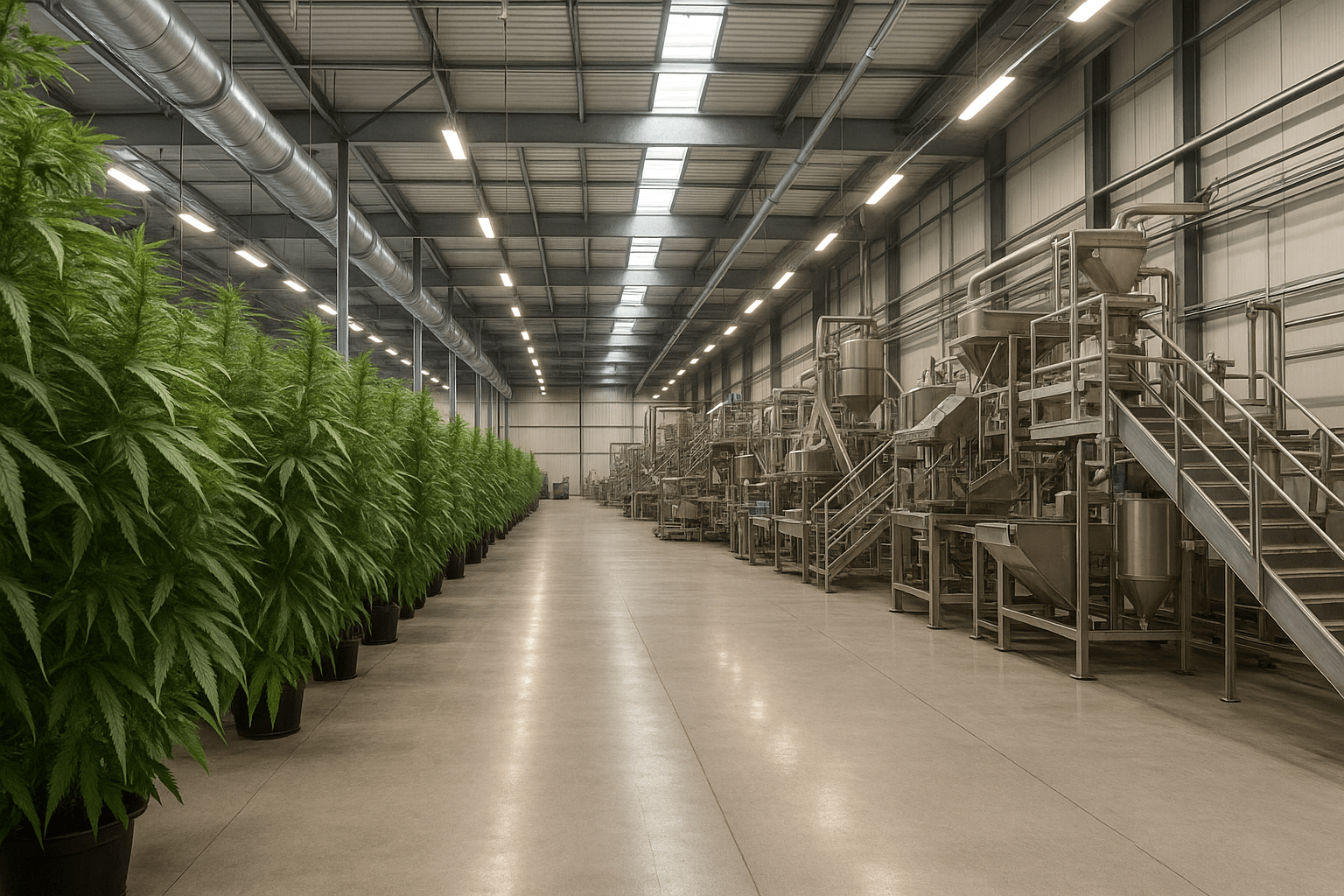
GMP Standards for CBD Processing Sites in Europe
Introduction
Good Manufacturing Practice (GMP) standards are a set of essential guidelines to ensure the quality and safety of products, including in the CBD sector. Well-known in the pharmaceutical and cosmetic industries, they are increasingly regulating CBD processing in Europe. The goal of these standards is to ensure that finished products meet strict criteria for quality, purity, and consistency.
In the rapidly growing CBD sector, producers and processors must not only comply with national legislation but also prepare for the regulatory framework of the European Union and Switzerland. Adhering to GMP standards offers numerous advantages, from enhancing the company’s reputation to protecting consumers and increasing quality controls.
This article aims to provide an educational and friendly insight into the role of GMP standards in CBD processing sites in Europe, while relying on official legislation and recognized standards (source: EudraLex, Volume 4, Part I - Basic GMP Principles, European Commission; Federal Office of Public Health, FOPH).
1. Legislative Context in Switzerland and Europe
1.1. Swiss Legal Framework
In Switzerland, the production and commercialization of CBD-based products must comply with the provisions of the Narcotics Act (LStup, RS 812.121). In particular, this text clarifies the maximum THC content for hemp plants to be considered legal: they must contain less than 1% THC (source: FOPH, “FAQ on CBD Cannabis,” 2021).
Moreover, the manufacture of CBD products intended for therapeutic or medical use is subject to controls by Swissmedic, the Swiss agency for therapeutic products. The adoption of GMP principles in processing sites is therefore encouraged to ensure the pharmaceutical quality of CBD extracts, manufacturing paths, storage, and distribution (source: Swissmedic, “Good Manufacturing Practices,” 2022 guidelines).
1.2. European Legal Framework
In the European Union, GMP standards are primarily defined by EudraLex, Volume 4 - Good Manufacturing Practice Guidelines, developed by the European Commission. Although CBD is sometimes classified as a dietary supplement, cosmetic, or pharmaceutical product depending on the country, the requirement for good manufacturing practice is now a common expectation when a manufacturer wishes to offer a high-quality product or meet pharmaceutical standards (source: EudraLex, Volume 4, 2022).
For some member states, CBD may fall under other regulations (on novel foods or nutrients) that require production sites to prove their reliability and the safety of their facilities. Thus, obtaining GMP certification becomes a strong argument for distributing the product in the European market.
2. Fundamental Principles of GMP Standards for CBD
2.1. Traceability
Traceability is one of the fundamental pillars of GMP standards. In CBD production, it is crucial to document every step of the process:
- The origin of the raw material (seeds, cultivation methods).
- Harvest conditions (date, location, storage temperature).
- Extraction parameters (solvents, extraction time, pressure if supercritical CO₂ extraction).
- Systematic laboratory tests to identify cannabinoid content, terpenes, solvent residues, pesticides, and heavy metals.
Each production must have a detailed batch record (commonly called a Batch Record) attesting to compliance with internal procedures and legal requirements (source: EudraLex, Volume 4, Chapter 4 on documentation).
2.2. Quality Control
Quality control (QC) is essential to ensure the conformity of the final product. According to Part I, Chapter 6 of the European GMP guidelines (EudraLex, Volume 4), a quality control laboratory must:
- Regularly verify the purity of the CBD extract (analysis of THC, CBD, and other cannabinoid content).
- Confirm the absence or limited presence of contaminants (pesticides, microorganisms, fungi, heavy metals).
- Determine product stability over time (stability studies under real and accelerated conditions).
This approach is also supported by the FOPH, which recommends conducting laboratory analyses for any CBD product marketed in Switzerland to avoid the presence of harmful substances such as certain pesticides or heavy metals that could harm consumer health (source: FOPH, “Analytical Recommendations on CBD Hemp Products,” 2020).
2.3. Qualified Personnel
The notion of trained and qualified personnel is another crucial aspect of GMP standards. Chapter 2 of EudraLex, Volume 4, emphasizes that all personnel involved in CBD processing and control must receive appropriate training on:
- Workplace safety (handling machines, solvents, etc.).
- Hygiene procedures (wearing protective equipment, limiting cross-contamination).
- Basic GMP principles (documentation, traceability, protocol compliance).
Without qualified personnel, implementing procedures and documentation is not enough to ensure the final product’s quality.
2.4. Premises and Equipment
The equipment used, including CO₂ extractors, maceration tanks, or any other extraction tool, must be designed to minimize contamination risks. Facilities must be equipped with dedicated spaces, separated according to stages (raw material reception, extraction area, packaging area), to avoid any cross-contamination (source: EudraLex, Volume 4, Chapter 3).
In short, GMP standards require control of the work environment: appropriate ventilation, easy-to-clean surfaces, clearly identified areas, and regular preventive maintenance.
3. Implementing GMP Standards in a CBD Processing Site
3.1. Step 1: Initial Diagnosis
Before starting the GMP certification process, an internal or external audit is recommended to assess the current situation. This audit helps identify:
- The gaps between current practices and GMP requirements.
- Major risks (contamination, poor documentation, lack of training).
- Action priorities (documentation overhaul, equipment acquisition, facility improvement).
Developing a detailed action plan then forms the basis for taking each step towards compliance.
3.2. Step 2: Compliance of Procedures
Production and control procedures must be described exhaustively and clearly. For example, a supercritical CO₂ extraction protocol must specify:
- Pressure and temperature parameters.
- Equipment used.
- Extraction time.
- In-process controls (test sampling).
- Safety instructions for personnel.
This documentation must be accessible and understood by the entire team concerned. The basic principles of Quality Assurance (QA) provide for cross-checks (or “procedure reviews”) to ensure that all personnel systematically apply the protocols.
3.3. Step 3: Validation of Analytical Methods
To ensure the quality and reproducibility of analyses, the methods used must be validated according to criteria of specificity, linearity, accuracy, and precision (source: EudraLex, Volume 4, Chapter 6). For example, the method of analyzing THC-CBD content by high-performance liquid chromatography (HPLC) must undergo validation tests to prove its reliability.
Validation involves:
- Evaluating the detection and quantification limits.
- Assessing potential interferences (other cannabinoids).
- Demonstrating repeatability and reproducibility on different equipment or laboratories.
3.4. Step 4: Personnel Training
In a GMP compliance perspective, training should not be occasional but continuous. Employees must regularly update their knowledge:
- New standards or unofficial circulars issued by Swissmedic or the FOPH.
- Evolutions of internal protocols.
- Technological improvements (new control tools).
All training must be documented (name, date, content, signature) to demonstrate that the personnel involved remain competent and informed.
3.5. Step 5: Audit and Certification
Once the quality management system is operational, the certifying body (often an entity recognized by the state or health authorities) conducts a compliance audit. The audit covers all the mentioned steps: traceability, documentation, quality control, hygiene, etc. If all requirements are met, the processing site obtains GMP certification.
It is essential to maintain this level of requirement after certification. Surveillance or renewal audits are conducted periodically to verify that standards are still applied and correctly updated (source: Swissmedic, “GMP Inspection,” 2022 guidelines).
4. Specific Applications of GMP Standards to CBD
4.1. THC Content Control
To remain legal in Switzerland, the maximum limit of 1% THC in the finished product must be demonstrated by laboratory analyses (source: Narcotics Act, LStup, art. 2, para. 1). In Europe, the limit varies by country (often 0.2% or 0.3% THC). A producer wishing to export their CBD must therefore adapt their controls and labeling according to the destination.
Thanks to GMP standards, the documentation of this control is standardized: each batch must include a Certificate of Analysis (CoA) certifying cannabinoid content and the absence of problematic contaminants.
4.2. Contaminant Management
Hemp is a bioaccumulator plant, meaning it easily absorbs heavy metals and other chemical residues from the soil. Without rigorous controls, these substances can end up in the final product (source: EFSA, “Scientific Opinion on Lead in Food,” 2010).
GMP standards require efficient laboratories and strict procedures to:
- Verify the absence or low concentration of pesticide residues, heavy metals (lead, cadmium, arsenic, mercury), or molds such as Aspergillus.
- Establish acceptance limits and reject non-compliant batches.
This approach ensures consumer safety and compliance with public health standards set by the EU and Switzerland.
4.3. Preservation and Stability
The preservation of CBD in the form of oil or resin (CBD hash) must meet adequate climatic conditions. GMP standards take into account:
- Storage temperature (generally cool and stable).
- Light exposure (opaque or amber packaging is often recommended).
- Relative humidity and oxygenation (sealed packaging under controlled atmosphere contributes to product stability).
To prove the validity of expiration dates (or “Best before”), GMP standards require accelerated stability studies (e.g., at 40°C and 75% relative humidity), followed by long-term stability tests (at room temperature). These studies help determine more precisely the duration during which the concentration of active ingredients (cannabinoids) remains stable.
5. Economic Benefits and Challenges
5.1. Consumer Trust
The CBD market is sometimes plagued by doubts about the reliability and quality of certain products. By adopting GMP standards, brands reassure consumers about:
- Consistent quality.
- The product’s health safety.
- The authenticity of cannabinoid levels stated on the label.
According to Swissmedic, compliance with good manufacturing practices remains a major criterion when granting authorizations for products considered therapeutic (source: Swissmedic, “Frequently Asked Questions: Cannabis-Based Products,” 2022).
5.2. Facilitation of Export
The global CBD market is expanding. To export outside Switzerland or to other European countries, having GMP certification is a significant asset. In some cases, it even becomes mandatory to enter certain regulated markets, especially when approaching the medical sector.
5.3. Reduction of Product Recall Risks
Implementing a robust quality system greatly reduces the risk of defects that could lead to a massive product recall. A non-compliance detected afterward can be very costly for the company, both financially and in terms of brand image.
6. Challenges and Solutions for Small Producers
6.1. Certification Costs
For a small CBD producer, the costs associated with setting up the GMP system and obtaining the certificate can represent a significant investment. Considerations include:
- Purchasing or upgrading equipment.
- Adapting or constructing facilities to standards.
- Continuous personnel training.
- External audits and administrative fees.
A solution is to pool certain resources (laboratory, training personnel) by partnering with other local companies while maintaining clear and individualized traceability.
6.2. Documentary Complexity
GMP standards require exhaustive documentation: standard operating procedures (SOP), batch records, maintenance and cleaning logs, control reports, etc. The accumulation of documents can quickly become a headache.
More and more producers are adopting IT solutions (quality management systems or QMS) to digitize and organize documentation. To avoid errors, it is important to:
- Provide access to up-to-date documents on a centralized server.
- Implement clear procedures for creating, reviewing, and archiving documents.
- Regularly check the versions used by personnel.
6.3. Compliance with Constantly Evolving Regulations
The hemp and CBD sector remains changing, both in Switzerland and the rest of Europe. Legal requirements (THC percentage, CBD legal status, etc.) can vary quickly. Staying compliant requires rigorous regulatory monitoring by consulting:
- Regular publications from the Federal Office of Public Health (FOPH).
- EudraLex updates, published by the European Commission.
- Communications from Swissmedic and equivalent bodies in export countries.
7. Future Perspectives
7.1. Towards European Harmonization
The European Union could move towards more global harmonization of rules concerning CBD, inspired by regulations already in place for medical cannabis-based drugs. In the meantime, GMP requirements serve as a common reference for assessing product quality and safety.
7.2. Innovations in Quality Control
New analytical technologies, such as high-resolution mass spectrometry and nuclear magnetic resonance (NMR), could make purity and cannabinoid profile tests faster and more accurate. These advances, combined with cleaner extraction processes (supercritical CO₂ extraction, for example), will continue to improve the reliability of CBD production.
7.3. Growing Demand for Transparency
Consumers increasingly want access to detailed information about the origin, production methods, and profile of their product. GMP standards help provide this transparency through:
- More precise labels (CBD, THC, terpene levels).
- QR codes linking to certificates of analysis.
- Transparent communication about production conditions.
Conclusion
Adopting GMP standards in CBD processing sites in Europe is both a mark of seriousness and an essential precaution to meet legal requirements and market expectations. These standards cover all aspects of production: facility design, personnel qualification, validation of analytical methods, respect for the traceability chain, and strict quality controls.
In Switzerland, legislation has required for several years a THC level below 1% for CBD to be considered legal (source: Narcotics Act, LStup, RS 812.121), while in the European Union, thresholds generally remain lower (often 0.2% or 0.3%). In any case, producers and processors who comply with GMP standards have a major asset to conquer new markets and gain consumer trust.
Implementation can be a significant challenge, particularly financially and organizationally, but it proves profitable in the medium and long term thanks to reduced product recall risks, improved export capacity, and strengthened company reputation. In a rapidly growing and still rapidly evolving sector, relying on internationally recognized standards like GMP remains a solid strategy to ensure the sustainability of one’s business.