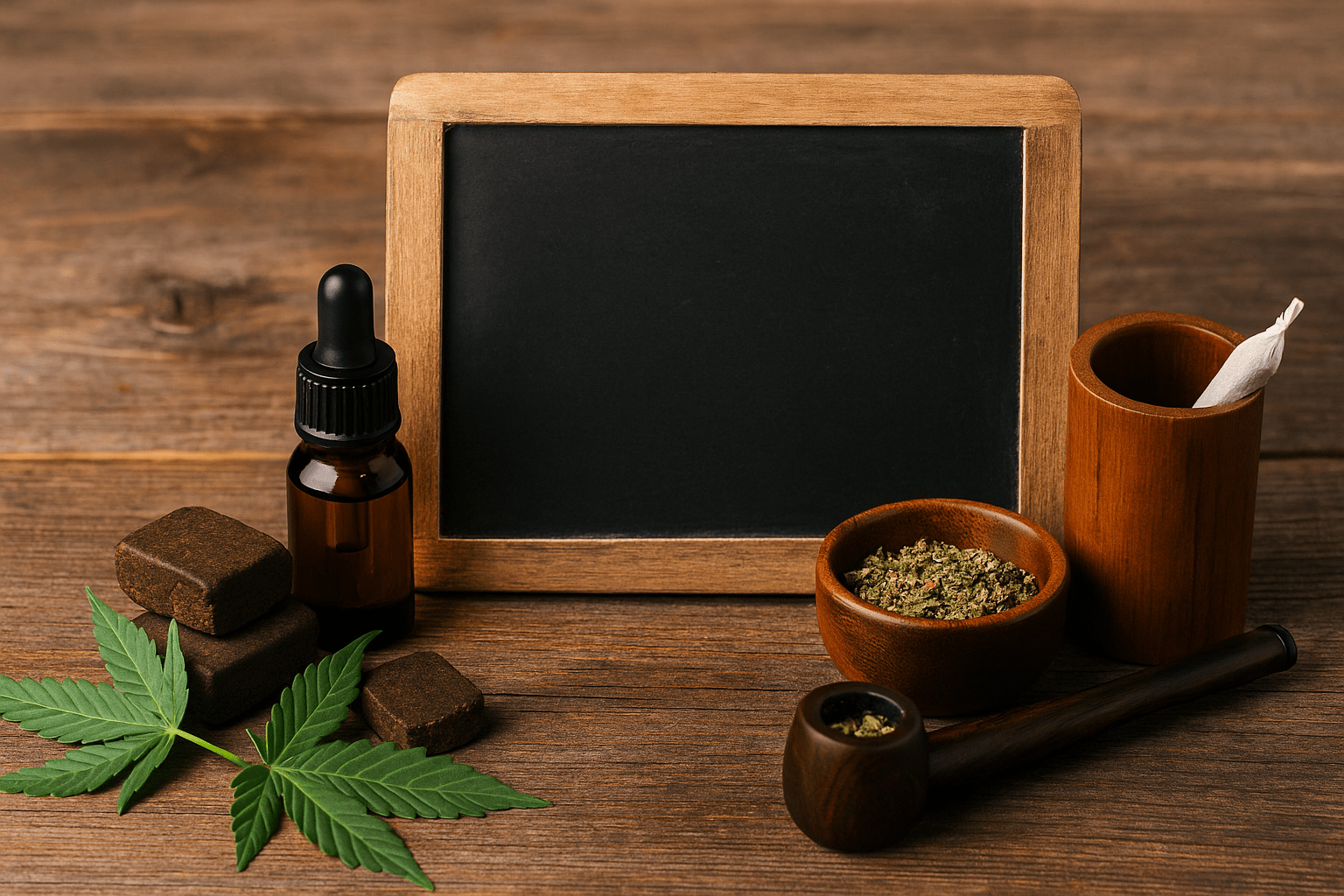
A Brief History of Hashish: From the Middle East to Modern CBD Hash
Introduction
Hashish, often abbreviated as “hash,” is a cannabis derivative typically found in the form of compact resin. It is appreciated for its sensory characteristics and varying levels of cannabinoids. Today, in Switzerland, the emergence of CBD Hash—legal because it complies with the authorized THC threshold—is garnering increasing interest. But before delving into the production methods, legislation, and analytical specifics of modern CBD Hash, it is useful to trace the long and rich history of hashish. From the early sieving practices in the Middle East to the Swiss laboratories specializing in THC content control, let’s embark on a journey to discover this legendary cannabis concentrate.
Historical Origins of Hashish
Early Traces in the Arab World
The word “hashish” comes from the Arabic “حشيش” (ḥashīsh), which literally means “grass.” According to several historians specializing in the study of medieval Islamic culture, written traces of hashish appear in 10th-century texts describing the recreational use of cannabis extracts. These practices were initially localized in Persia and Egypt before spreading to other regions of the Middle East.
Cannabis resin, manually pressed or sieved, offered a higher concentration of active components compared to the simple use of dried flowers. At the time, it was used in festive or spiritual contexts, although religious and political authorities did not always view its use favorably. Several 13th-century Arab chroniclers recount occasional bans targeting hashish, which was seen as a product that could encourage social deviance. This is an early example of friction between a popular practice and authority, a theme that would recur many times in the history of cannabis.
Spread in the Ottoman Empire and Beyond
As the Ottoman Empire expanded over a vast part of the Middle East and Southeastern Europe, the use of hashish spread with it. In major cities like Istanbul, Cairo, or Damascus, circles of enthusiasts formed to consume and discuss this resin. Some European travelers also discovered it, contributing to its diffusion into other cultures.
By the late 18th century, Western merchants and explorers brought hashish samples back to Europe as exotic curiosities. Writers and artists, particularly in France, became interested in exploring its psychoactive effects in their narratives. The diffusion of hashish thus initiated a complex dialogue between literary fascination, scientific discovery, and prohibitive measures by modern states.
Hashish and Science
Beginnings of Cannabis Research
The effects of cannabis attracted the attention of European researchers as early as the 19th century. Doctors and pharmacists began studying the plant to understand what this sticky, dark resin was made of. The extraction of “cannabis ethers” was then experimented with in various European laboratories, paving the way for scientific application to cannabis.
In the 20th century, research intensified, especially with the identification of THC (tetrahydrocannabinol) in 1964 by chemists in Israel, under the direction of Dr. Raphael Mechoulam (source: Mechoulam R. et al., Journal of the American Chemical Society, 1964). This discovery revolutionized the understanding of cannabis and its effects. Researchers highlighted that cannabis contains different molecules, some of which are non-psychoactive like cannabidiol (CBD).
Towards the Distinction Between THC and CBD
While THC is the main psychoactive component of cannabis, CBD, on the other hand, does not have similar psychotropic effects. Scientists quickly became interested in the possibility of producing hemp varieties rich in CBD and low in THC. The advent of selective breeding allowed for the creation of cannabis strains with THC levels below the legal threshold set in some countries, including Switzerland.
In Switzerland, the maximum allowable THC content in hemp-derived products is 1% (source: Federal Office of Public Health (FOPH), “Cannabis products with a THC content below 1%”). Based on this regulation, the development of CBD Hash is possible, combining the tradition of hashish with the modernity of genetic selection and strict laboratory controls.
Swiss Legal Framework: Evolution and Specificities
The Narcotics Act (LStup)
Switzerland has specific legislation regarding narcotics. The Narcotics Act (LStup, RS 812.121) governs all psychotropic substances, including THC-rich cannabis. According to this law, cannabis is considered a narcotic if it exceeds a certain THC level.
Since 2011, and more formally since a 2016 amendment and subsequent adjustments, the legal limit is now set at 1% total THC. Beyond that, the product is considered illegal except for medical use or authorized scientific research. Below 1%, the product is legal, provided it complies with other legal provisions (source: FOPH, update on the legal status of cannabis with less than 1% THC).
Controls and Information Duties
Swiss producers and distributors of CBD Hash must ensure the legal compliance of their products. Laboratories specializing in cannabinoid analysis regularly conduct tests to certify that the THC level remains below the threshold. Moreover, any claims of therapeutic benefits must comply with drug-related prescriptions, meaning a product cannot be advertised as a remedy without authorization.
Therefore, CBD Hash must be presented as a consumer or possibly wellness product, but never as a medicine, unless specifically authorized by Swissmedic (the Swiss Agency for Therapeutic Products).
From Traditional Hashish to CBD Hash: Continuities and Differences
Similarities in Production
Whether discussing traditional hashish or modern CBD Hash, many production steps are similar. Historically, hashish is obtained by collecting and sieving trichomes present on the cannabis plant’s flowers. These trichomes contain high concentrations of cannabinoids and terpenes, which give the product its consistency, color, and characteristic aroma.
The basic process:
- Selection of dried flowers (from varieties authorized in Switzerland if aiming for CBD Hash).
- Mechanical or manual sieving to separate trichomes from plant material.
- Collection of trichome powder, commonly called “kief.”
- Pressing using artisanal (hand presses) or industrial (hydraulic or mechanical presses) means to obtain compact resin blocks.
Essential Difference: THC Content
The main difference lies in the THC content. Hemp varieties used to produce CBD Hash are specially selected to comply with the legal limit of 1% in Switzerland. Other countries sometimes have a limit of only 0.2% or 0.3% THC, but the principle is similar: maximize CBD while minimizing THC.
Considering this reduced THC content, CBD Hash does not induce marked euphoria or significant psychotropic effects. This is precisely what allows it to be legally marketed in the Confederation. Consumers seeking relaxing properties or light recreational use, without excessive alteration of consciousness, may find an appropriate alternative in CBD Hash.
Production and Characteristics of Modern CBD Hash
Choice of Hemp Varieties
The first crucial step is selecting authorized hemp varieties, i.e., those listed in an official register or compliant with THC requirements. Some well-known varieties on the Swiss market include strains like “Fedora 17” or “Carmagnola,” historically used for industrial hemp production. Other breeders are also working on developing hybrid strains, rich in CBD and low in THC, such as “Kompolti” or local Swiss varieties.
These varieties offer a specific terpene and cannabinoid profile that is reflected in the final product. Swiss laboratories regularly analyze these hemp flowers to confirm their THC and CBD levels before any transformation process.
Quality Control and Laboratory Testing
To ensure safety and legality, samples of flowers and hashish are taken and sent to laboratories. Among the parameters generally controlled:
- THC and CBD levels (gas or liquid chromatography coupled with a mass detector).
- Potential residues of pesticides or heavy metals.
- Microbiology (detection of possible fungi, bacteria, or molds).
- Terpene profile, which influences odor and taste.
Laboratory tests are an essential source of reliability for consumers. According to the Federal Office of Public Health (FOPH) and the Association of Cantonal Chemists of Switzerland, these analyses are essential to ensure that marketed products comply with legislation and present a satisfactory level of purity.
Different Production Methods
Modern CBD Hash production techniques can vary:
- Dry sieving: similar to the traditional method, dry sieving involves filtering dried hemp flowers through increasingly fine screens. The trichomes fall, and the collected powder is then pressed hot or cold.
- Cold extraction: some companies prefer to mix plant material in ice water or use dry ice (solid CO₂). The heavier trichomes fall to the bottom and are filtered, then dried and pressed.
- Hybrid techniques: sometimes CBD extracts in the form of isolate or distillate are added to maintain CBD content and ensure the THC level does not exceed 1%.
Each of these approaches gives the final product a distinctive texture, color, and aroma. Some CBD Hash will appear light brown, others darker or even almost black, depending on the temperature and pressure used.
Usage and Consumption Methods
Legal Status and Individual Responsibility
Although CBD Hash is legal in Switzerland when it contains less than 1% THC, the use and possession of cannabis-derived substances should always be approached with caution and responsibility. Many Swiss public health and addiction experts, including Addiction Switzerland, remind that cannabis consumption, even with low THC content, is not without potential effects on the body and should be done with full awareness.
Main Consumption Methods
CBD Hash can be consumed in various ways:
- Crumbling and inclusion in a rolled cigarette (or in a legally authorized herb substitute).
- Vaporization: using a vaporizer designed for concentrates allows inhaling active ingredients without combustion.
- Ingestion: some consumers incorporate hash into culinary preparations, but this often requires decarboxylation (gentle heat to convert CBDA into CBD).
Each of these approaches influences the effect felt, latency time, and bioavailability. Vaporization, for example, is sometimes highlighted as a healthier solution than direct combustion (source: Journal of Cannabis Research, peer-reviewed study, 2020). Nevertheless, each consumer is encouraged to research thoroughly before trying any method.
Conservation of CBD Hash
Factors Influencing Degradation
Cannabis resin, like any natural product, can degrade over time. Certain parameters play a role in the optimal preservation of CBD Hash:
- Light: UV exposure accelerates the degradation of cannabinoids.
- Air: oxygen can oxidize some compounds, altering flavors and potency.
- Heat: excessively high temperatures can evaporate volatile terpenes and degrade CBD.
Tips for Good Conservation
To preserve the quality of your CBD Hash:
- Store it in an airtight jar, ideally glass.
- Keep it away from direct light, in a cool, dry place.
- Avoid abrupt temperature changes.
According to some recommendations from specialized laboratories (e.g., internal guidelines of the Swiss Hemp Entrepreneurs Society), well-preserved CBD Hash can last several months, even a year, without notable quality loss. Beyond this period, a change in aroma and a decrease in the levels of certain terpenes and cannabinoids are often observed.
The Future of CBD Hash in Switzerland
A Booming Market
In Switzerland, the CBD Hash market has been expanding since the legal THC threshold was set at 1%. More and more companies are venturing into the production of new hemp varieties and new concentrates, taking advantage of growing consumer demand. This growth is explained by several factors:
- The general popularity of CBD, driven by a trend towards natural and relaxing products.
- A good social acceptance of low-THC cannabis, perceived as less dangerous than psychoactive cannabis.
- A clear legal framework allowing entrepreneurs to position themselves in this segment.
Innovations and Prospects
Several innovation axes are already noticeable:
- In-depth research on minor cannabinoid profiles (CBG, CBN, etc.) to create new ranges of hash with potentially varied virtues.
- Optimization of extraction methods to limit solvent use and offer even “purer” products.
- Development of more environmentally friendly production techniques, with better water, energy resource, and packaging management.
It is likely that Swiss regulations will continue to evolve, particularly in connection with pilot experiments that authorize the sale of recreational cannabis for experimental purposes in certain cities (sources: FOPH, “Pilot experiments: cannabis for non-medical purposes,” updated in 2023). This dynamic could eventually influence distribution methods and the taxation of CBD Hash.
Conclusion
Hashish has a centuries-old history rooted in the Middle East. Once renowned for its psychoactive effects, it has traversed the ages, sometimes sparking fascination, sometimes disapproval. Today, Switzerland stands out with innovative regulations that allow the production and commercialization of CBD Hash, provided the product respects the 1% THC limit.
This legal evolution, supported by strong demand and marked scientific interest, has enabled the emergence of a flourishing sector. Independent laboratories ensure this by meticulously analyzing cannabinoid content and guaranteeing quality. From the selection of hemp varieties to the storage of the finished product, the entire Swiss CBD Hash industry relies on traditional know-how and modern techniques, complemented by a strict legal framework.
Both a heir to a millennial history and a symbol of a more pragmatic contemporary conception of cannabis, CBD Hash today arouses curiosity and enthusiasm, both among natural flavor enthusiasts and those seeking relaxation without pronounced psychoactive effects. The future of this product is promising, with multiple innovation prospects and growing recognition within the legal Swiss market.
Ultimately, the “brief history” of hashish, whose roots run deep, teaches us that it is less a product frozen in time than a concentrate of knowledge and practices in constant evolution. CBD Hash fits into this continuity, unfolding a new facet of this ancient resin, adapted to the sensitivities and legal requirements of the 21st century.