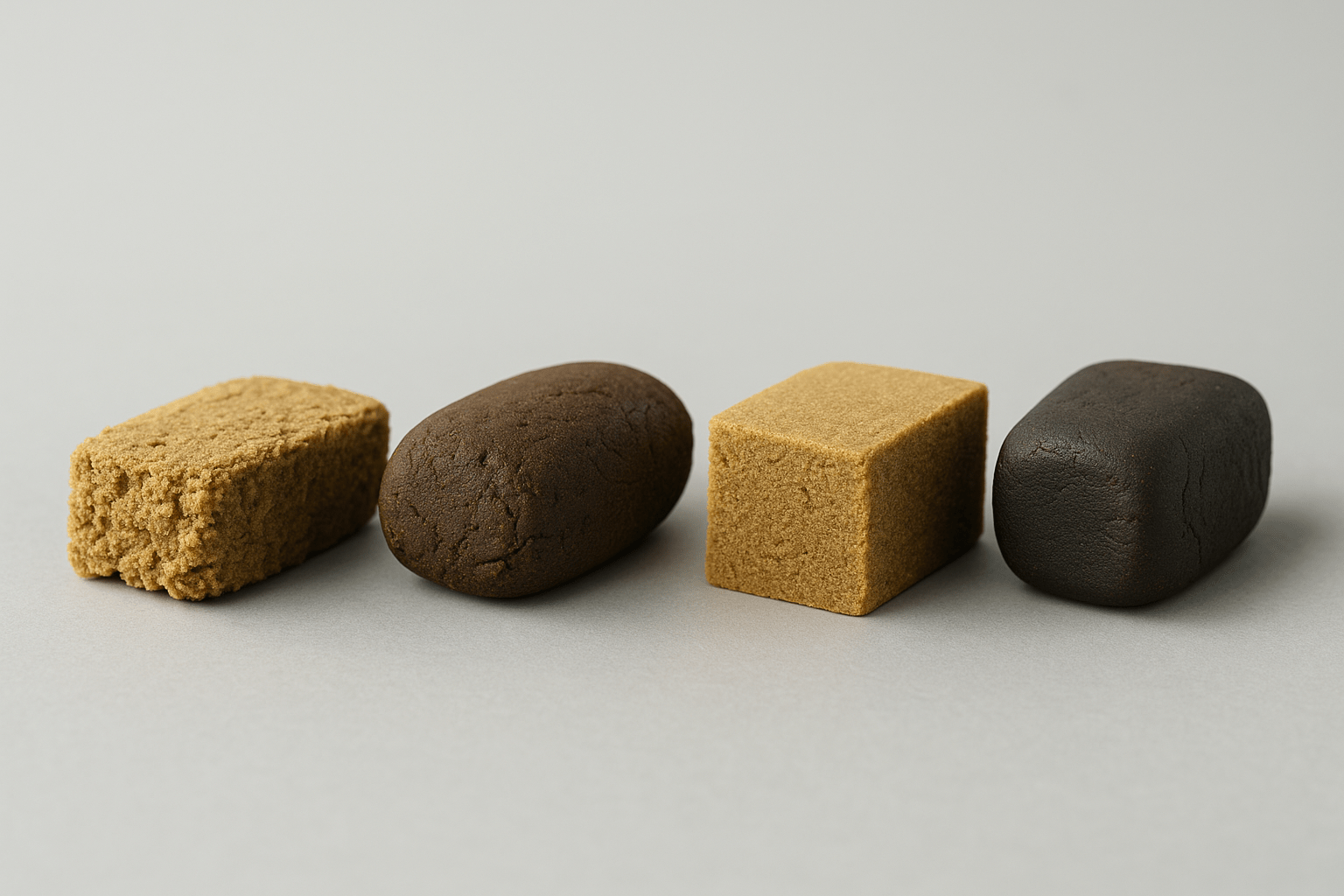
Standardized Sensory Analysis: Aromas and Colors of a Premium Hash
Introduction
The world of CBD Hash is gaining increasing interest in Switzerland, particularly due to regulations allowing the production and sale of hemp-based products containing less than 1% THC (Federal Office of Public Health, “Cannabis: Additional Information,” 2021). Among these products, premium CBD Hash holds a special place due to its quality and unique sensory characteristics. To distinguish an “ordinary” Hash from a “premium” Hash, implementing standardized sensory analysis is essential for both professionals and discerning consumers.
In the agri-food sector and similar industries, sensory analysis benefits from recognized methodological tools, such as ISO standards (ISO 8586:2012 and ISO 6658:2017). Applied to cannabis-derived products, this approach allows for precise qualification of the appearance, color, aroma, and even the consistency of Hash. Swiss companies and laboratories are increasingly interested in this because the quality factors that define a high-end product should not rely solely on subjective impressions. Instead, the idea is to use a rigorous scientific protocol to ensure reliable and reproducible evaluation.
In this article, we will discuss the key concepts of sensory analysis applied to premium CBD Hash, focusing on two main criteria: aromas and color. We will review the components that influence the aromatic profile, as well as the production and maturation processes that can affect the final color of the product. We will also discuss the Swiss legal framework, which sets strict requirements for THC content, and provide an overview of the different stages of standardized sensory analysis. The goal is to provide a comprehensive, factual, and educational overview of how the sensory quality of a premium CBD Hash is built and validated by a reliable method.
What is Standardized Sensory Analysis?
Sensory analysis encompasses a set of scientific methods used to evaluate the characteristics of a product using human senses: sight, smell, taste, touch, and sometimes hearing. In most sectors, including agri-food, these methods are governed by international standards. Two of them are particularly important:
- ISO 8586:2012: It defines guidelines for the selection, training, and monitoring of sensory evaluators.
- ISO 6658:2017: It provides general guidelines on the methodology of sensory analysis, from sample preparation to result interpretation.
The primary goal of this standardization is to improve the reproducibility and reliability of the data collected. When this approach is applied to the world of CBD Hash, it ensures that different samples are examined and rated under controlled and identical conditions to limit biases. This prevents variations in lighting, temperature, or other environmental factors from altering sensory judgment.
In the case of premium CBD Hash, two major elements are particularly important: visual appearance (including color) and aroma (a wide range of notes, from woody to fruity). Of course, these criteria are not the only indicators of overall quality (other analyses, particularly chemical ones, are necessary to assess the exact content of cannabinoids and terpenes). However, the development of a scientifically assisted sensory analysis represents a significant advancement in objectifying quality.
Aromas of a Premium CBD Hash
The aroma of a premium CBD Hash, sometimes described as the “bouquet,” is primarily due to the presence of terpenes, aromatic compounds naturally produced by hemp. According to a study published in Frontiers in Plant Science by André et al. (2016), hemp (Cannabis sativa) contains more than a hundred different terpenes. These molecules give CBD Hash a variety of aromatic notes: earthy, woody, fruity, spicy, and even floral.
Understanding the Contribution of Terpenes
Terpenes are a subject of interest for both enthusiasts and researchers. Among the most commonly identified terpenes in hemp are:
- Myrcene: Often associated with musky and earthy notes.
- Limonene: Adds a citrus touch, often linked to freshness.
- Caryophyllene: Suggests spicy, sometimes peppery hints.
- Pinene: Resembles pine and fir aromas, with a resinous note.
According to the same study (André et al., 2016), each hemp variety has a specific terpene profile, hence the diversity of sensory experiences. Moreover, during Hash production, certain steps like sieving or pressing can enhance the presence of some terpenes while attenuating others.
Influence of Cultivation and Storage
The concentration of terpenes also depends on:
- Cultivation method: Factors like soil type, fertilizer used, or photoperiod can influence terpene concentration.
- Harvesting: If flowers are picked too early or too late, the overall terpene content may decrease.
- Storage: Some terpenes are volatile and degrade when storage conditions are not optimal. It is best to keep Hash away from direct light, in airtight containers, at controlled temperature and humidity (ISO 6658:2017).
A premium CBD Hash is generally characterized by a rich, balanced, and stable bouquet. Its aromas should be easily noticeable as soon as the container is opened and remain striking during handling. A standardized sensory analysis protocol will involve having a trained panel describe these aromas, using specialized vocabulary to precisely catalog each perceived aromatic note.
Typical Colors of a Premium Hash
The color of Hash is another crucial criterion for consumers and distributors. In Switzerland, provided the legal THC rate (less than 1%) is respected, Hash from several hemp varieties can be marketed. Each variety and production technique can impart a particular hue to the final product.
Factors Influencing Color
- Hemp variety: Some varieties display lighter pollen (kief), leaning towards yellow or pale green, while others exhibit more brown, even almost black tones.
- Sieving method: The grain obtained after sieving can be more or less colored depending on the sieve’s fineness and the freshness of the plant material used.
- Oxidation: Upon exposure to air and depending on the maturation duration, Hash tends to darken. This can result in brown or black hues if the resin has been stored for a long time.
- Pressing: Pressure alters texture and color. A heavily compressed Hash traps essential oils and can take on a darker hue.
In a sensory analysis context, color is often evaluated under standardized lighting (ISO 6658:2017). Tasting panels use a color chart to precisely describe the observed shade. Similar to wine, where one tries to qualify the robe, here it is about differentiating, for example, a light brown from a dark brown, or a gray-green from a gray-brown.
Desired Shades in Premium CBD Hash
Even though the ideal color is very subjective, a “clean” and homogeneous shade is often associated with a quality product. Hash with greenish reflections sometimes suggests a strong presence of plant material, while a golden brown can indicate a good balance between pollen and resin without excess chlorophyll. Conversely, a deep black may indicate a Hash rich in oils, long pressed or aged.
There is no legal standard imposing a specific color, but in a commercial context, a Hash that is too dark or too dry may be perceived as having lost its freshness. Trained evaluators can also spot potential anomalies, such as whitish traces indicative of poor preservation or fungal contamination.
Why is Standardization Important?
In Switzerland, the sale of cannabis-based products is subject to strict controls to verify THC content, in accordance with the Federal Act on Narcotics and Psychotropic Substances (NarcA, RS 812.121). For professionals, it is therefore crucial not only to comply with the 1% THC limit but also to ensure the consistency of their production batches in the face of ever more demanding demand.
Standardized sensory analysis allows:
- To enhance quality: By communicating on objective results, brands can demonstrate the stability of their production methods.
- To avoid subjectivity: It eliminates individual biases. Evaluations are conducted blind, under controlled conditions.
- To identify defects: Atypical aromas or inconsistent color can reveal a problem in the production or storage chain.
- To train staff: Commercial and technical teams can be introduced to a common terminology, facilitating internal and client communication.
Thus, the use of professional protocols (ISO 8586:2012, ISO 6658:2017) within a clearly defined legal framework contributes to the emergence of a reliable and high-quality market for CBD Hash in Switzerland.
Methodology of Sensory Analysis for CBD Hash
To objectively evaluate a premium Hash, here are the most common steps, inspired by normative tools:
1. Selection and Training of the Panel
The panel of evaluators must consist of individuals whose sensory abilities are validated. ISO 8586:2012 provides criteria on how to recruit and train these judges. They must:
- Quickly recognize various odors.
- Be able to distinguish different color intensities.
- Be trained to use a consistent descriptive vocabulary.
Calibration exercises are also organized to harmonize perceptions and reduce evaluation discrepancies.
2. Sample Preparation
Hash is conditioned into identical samples (same weight, same container) so that each judge receives the same amount to evaluate. A coding system (number, letter code, etc.) allows for blind evaluation. Temperature, humidity, and lighting conditions are standardized (ISO 6658:2017).
3. Visual Evaluation
First, the color is noted:
- Shades (e.g., light brown, dark brown, gray-green).
- Homogeneity (spots, marbling, etc.).
- Shine or matte appearance.
Then, the texture is also inspected:
- Ease of breaking.
- Presence of grains or oily consistency.
4. Olfactory Evaluation
Judges focus on defining aromatic notes:
- Classification of primary aromas: woody, earthy, citrus, spicy, floral, etc.
- Aroma intensity: weak, medium, strong.
- Evolution of the odor when the resin is slightly heated or kneaded.
Here, a “terpene wheel” is often used, a visual tool listing the most common aromatic descriptors in cannabis (André et al., 2016).
5. Scoring and Synthesis
Each judge assigns a score according to pre-established grids. The collected data is then statistically analyzed (mean, standard deviation). A consensus can then emerge to define the overall quality of the Hash, its strengths, and potential weaknesses.
6. Communication of Results
Results are communicated in the form of:
- Internal product sheets, for quality teams.
- Reports intended to be sent to complementary analysis laboratories (exact cannabinoid content, heavy metals, microorganisms).
- Sales arguments: On catalogs and websites, highlighting dominant aromatic notes and characteristic color.
Influencing Factors on the Sensory Profile
Even when following very precise sensory analysis protocols, several factors can cause results to vary from one batch to another. Understanding these variables helps better control the quality of CBD Hash.
Hemp Variety
Each variety has a unique cannabinoid and terpene profile (André et al., 2016). Even under identical climate, genetics remain decisive. Swiss growers select legal varieties, i.e., below 1% THC (FOPH, 2021), but which can still boast a high CBD content and an interesting terpene spectrum. Consequently, Hash from variety A may reveal more fruity notes, while variety B will offer a more woody aroma.
Cultivation Conditions
Switzerland benefits from microclimates favorable to hemp cultivation. Soil composition (pH, minerals) and irrigation management have a direct impact on plant health and thus resin production. Agricultural studies conducted by Swiss research institutes confirm that soil quality and rigorous cultural practices (organic fertilization, absence of pesticides) are essential for obtaining quality Hash (Internal reports from FOPH-approved laboratories, 2020).
Harvesting and Processing Methods
Hemp flowers intended for Hash production must be harvested at the right maturation stage, preferably when terpene concentration is at its peak. Manufacturing techniques (dry sieving, ice water extraction, pressing) also influence texture and color. Similarly, poor temperature management during drying can cause volatile terpenes to evaporate, impoverishing the final aromatic bouquet.
Storage and Aging
As with many plant-based products (tea, coffee, dried herbs), maintaining the organoleptic properties of Hash depends on storage. Under the effect of oxygen, light, or heat, some terpenes degrade. The product can then lose aromatic intensity and darken visually. Premium Hash manufacturers often rely on airtight, opaque, or controlled-atmosphere packaging to prolong the freshness and aromatic potency of their products (ISO 6658:2017).
Case Studies: Variation of Colors and Aromas in Practice
To illustrate the diversity of aromas and colors, here are two fictitious but inspired examples of common practices in Switzerland:
-
Hash “Alpine Fruity”
- Color: Light brown with a golden hue.
- Aromas: Notes of red fruits and slightly tangy citrus, with a hint of pine.
- Production method: Fine dry sieving, moderate pressing.
- Key factor: Variety rich in limonene.
-
Hash “Forest Reserve”
- Color: Dark brown, oily appearance.
- Aromas: Woody, earthy, spicy, reminiscent of damp forest moss.
- Production method: Blend of different flowers, prolonged pressing under gentle heat.
- Key factor: High presence of caryophyllene and pinene.
In both cases, standardized sensory analysis would confirm or refute the descriptors put forward by the producer and assign a qualitative score. This is especially important as a consumer will seek an aromatic profile in line with personal preferences while ensuring they purchase a healthy and legal product.
Legal Considerations and Labeling
Beyond the sensory dimension, it is important to remember that Swiss law requires producers and distributors of CBD Hash to:
- Respect a total THC content below 1%.
- Clearly mention the CBD content on the label.
- Ensure the product is free from contaminants (heavy metals, microorganisms).
Specialized laboratories, certified by the Federal Office of Public Health, conduct complementary chemical analyses. In parallel, rigorous sensory evaluation enriches the information available on the label, offering the consumer a precise and reliable product description.
Towards Increased Professionalization
The premium CBD Hash market in Switzerland is rapidly professionalizing. More and more players understand the importance of a comprehensive quality approach, integrating not only cannabinoid quantification but also a truly structured sensory analysis. In a legal context framed by the NarcA and monitored by the FOPH, being transparent about production methods, laboratory controls, and standardized sensory processes represents a competitive advantage.
This upscale movement goes hand in hand with a growing culture of excellence, where terroir, artisanal know-how, and innovation (in the form of new drying or pressing methods) combine to offer consumers increasingly refined experiences. Standardization in sensory analysis is therefore not only a control tool but also a vector of education and differentiation for all those seeking to establish themselves in this booming sector.
Conclusion
Standardized sensory analysis provides essential insight into distinguishing the quality of a premium CBD Hash, whether evaluating its aromatic palette or the subtlety of its color. Thanks to scientifically recognized protocols by international standards (ISO 8586:2012, ISO 6658:2017), it becomes possible to use factual bases to objectively compare different batches and appreciate production consistency over time. The richness in terpenes (myrcene, limonene, caryophyllene, etc.), the manufacturing method (sieving, pressing, aging), and adherence to storage rules are all elements that influence the final result.
In Switzerland, the legal framework requires maintaining the THC rate below 1%, which does not hinder the pursuit of sensory excellence. On the contrary, the professionalization of production chains, collaboration with accredited laboratories, and the adoption of standardized analysis methods reinforce public confidence in premium CBD Hash products. Informed consumers can thus better understand and appreciate the different aromatic and colorimetric nuances while being assured of the quality and legality of what they purchase.
In summary, standardized sensory analysis reconciles science, regulation, and gustatory pleasure. It embodies a true lever of differentiation for producers and a guarantee of satisfaction for CBD Hash enthusiasts. As the market continues to evolve, standardization will contribute to elevating premium CBD Hash to the rank of an exceptional product while maintaining strict adherence to the quality and safety criteria required in Switzerland.