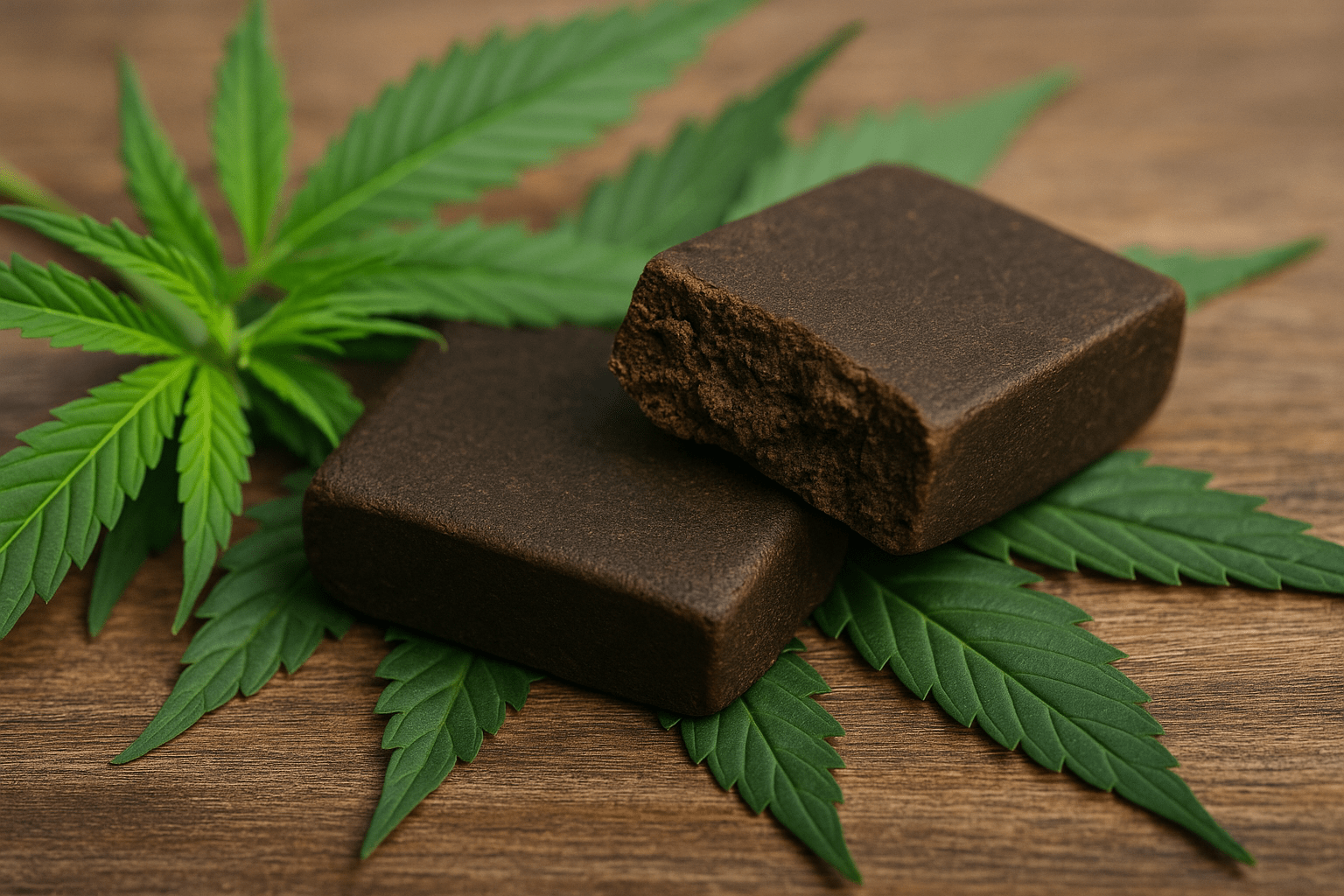
World Tour of Traditional Hashish Without THC
Introduction
Hashish, also known as “hash,” is traditionally associated with ancient cultures worldwide. From North Africa to Central Asia, cannabis resin has been consumed for centuries for its psychoactive properties and, in some regions, for various socio-cultural uses. However, the arrival of cannabidiol (CBD) on the international market has sparked interest in hemp-derived products, including a “THC-free” version or one with very low tetrahydrocannabinol content. Under Swiss law, cannabis with a THC content below 1% is considered legal (Source: Federal Office of Public Health (FOPH), accessed 10/12/2023).
This development has allowed for a reevaluation of the very notion of “hashish” and the exploration of various production methods aimed at preserving the authenticity of traditional practices while complying with legal constraints. In this article, we will embark on a true world tour of so-called “traditional” hashish to better understand how hemp resin production has evolved and how it adapts today to the market for low-THC products.
We will see how some countries historically recognized for their expertise (Morocco, Lebanon, Afghanistan, India, Nepal, etc.) are turning—or not—towards low-THC hemp varieties. The main goal is to reconcile cultural heritage, artisanal expertise, and legal compliance. Through this cultural journey, we will also highlight production methods, taste and olfactory characteristics, and the optimal preservation of these forms of hashish inspired by ancestral methods but adapted to modern regulations.
What is “THC-Free” Hashish?
The only major difference between classic hashish and “THC-free” hashish (or more precisely, very low THC content) lies in the cannabinoid composition of the starting plant. Historically, the cannabis plant used to make hashish contained a significant percentage of THC, the most well-known psychoactive molecule in cannabis. However, thanks to advances in genetic selection, there is now a wide range of industrial hemp varieties with low THC content and sometimes rich in CBD.
In Switzerland, the law allows the cultivation and commercialization of hemp with a THC level below 1% (Source: FOPH, Cannabis). This means it is possible to legally produce and sell hemp resins that meet this limit, provided the product’s compliance is proven through laboratory analyses. The analyses verify the cannabinoid profile to ensure compliance with current legislation.
On a sensory level, low-THC hashish can present aromas similar to those of classic hashish. Terpenes—molecules responsible for characteristic flavors and odors—remain present, often enhanced by meticulous cultivation criteria. However, the psychoactive effect is considerably reduced or even null when the THC level is very low. Consumers seeking mild relaxation or reduced side effects may turn to these products. The potential benefits of CBD (calming effect, presumed anti-inflammatory properties, etc.) are still under study. Scientific reviews, such as those published in “Frontiers in Neurology” (peer-reviewed), suggest that CBD could play a role in managing certain tensions or mild inflammations. However, it should be noted that CBD is not a medicine, and therapeutic claims are strictly regulated in Switzerland and Europe.
Brief History of Hashish
Historically, hashish is one of the oldest cannabis concentrates, with production dating back several centuries, even millennia, according to specialized historians. The earliest documented traces of cannabis resin consumption were found in Central Asia. Over time, its use spread to many regions: India, parts of the Middle East, North Africa, and South Asia. Traditional hashish production methods vary by culture but share a common principle: extracting resin from cannabis flowers through sieving or pressing trichomes.
In Morocco, hashish production became popular during the 20th century, particularly in the Rif region. Lebanon is also renowned for its high-quality hashish, often called “Red Lebanese” due to its reddish hue from certain locally cultivated varieties. In Afghanistan and Pakistan, there is a long history of hashish production and export, rooted in rural life and the local economy. In the Indian subcontinent, hashish is often linked to spiritual rites and religious festivals, such as the Holi festival in India, where “charas” (a form of resin obtained by hand rubbing) is sometimes consumed.
It is important to note that most of these regions have not historically focused on “THC-free” hashish. Local plants generally have high THC/CBD ratios. However, the growing popularity of CBD and the demand for low-THC products have prompted some producers to explore suitable hemp varieties. The result is the development of resins that retain centuries-old expertise while complying with specific legal requirements, notably those of Switzerland.
Hashish in Morocco
Morocco is among the world’s largest hashish producers, primarily concentrated in the mountainous Rif region. Moroccan production traditionally relies on a dry sieving technique: cannabis buds are dried and then passed through a sieve to extract the resin into a fine powder, which is then pressed to form hashish blocks. The quality and purity vary depending on the number of passes and the sieve’s fineness.
The Mediterranean climate and the Rif Mountains’ soils offer ideal conditions for cannabis cultivation. Historically, these plants had high THC levels combined with some CBD, but changing international market demands and growing interest in CBD have led some producers to focus on low-THC hemp seeds. Cooperatives have organized to test seeds that comply with regulations (less than 1% THC under Swiss law, and generally less than 0.2% for other European markets).
The result is a final product that retains the typical spicy and earthy aromas of Moroccan hashish while drastically reducing the psychotropic effect. According to laboratory analyses shared by Swiss importers, the final product must undergo a cannabinoid report to verify its legal compliance. Moroccan producers interested in the European market are aware of these requirements and have begun to integrate quality standards (control of heavy metal contamination, pesticides, etc.). This evolution reflects a desire to preserve tradition while meeting a new global demand centered on CBD and well-being.
Hashish in Lebanon
Lebanon has a centuries-old heritage concerning cannabis, primarily in the Bekaa Valley. Lebanese hashish is famous for its colors, ranging from red to yellow, depending on the plant variety and drying method. Traditionally, “Red Lebanese” reveals a reddish hue from plants harvested late, while “Blond Lebanese” is produced from plants cut earlier, offering a lighter color.
In the 1970s and 1980s, Lebanese hashish experienced a spectacular export boom, despite complex political and security contexts. Lebanese growers have built a global reputation by focusing on meticulous sieving methods for a relatively pure and aromatic product. However, the traditionally high THC level is rarely lowered. Local initiatives to produce low-THC hashish are still limited, although the gradual opening of international CBD markets could encourage more growers to experiment with industrial hemp varieties.
To qualify for commercialization in the legal Swiss market, interested Lebanese producers would need to conduct laboratory analyses proving a THC level below 1%. Logistical and legislative obstacles, coupled with regional instability, partially hinder the rise of low-THC Lebanese hashish. However, some initiatives are emerging with the support of cooperatives seeking to diversify their crops and fit into a stricter legal framework.
Hashish in Afghanistan
Afghanistan has long been renowned as a major hashish production hub. The provinces of Helmand and Kandahar, in particular, are known for cultivating cannabis varieties hard to find elsewhere. Afghanistan is even mentioned in ancient texts describing hashish as a product of high cultural and economic value. Like in Morocco, Afghan resin often stands out for its darker color and stickier texture, the result of more traditional sieving and sometimes hot pressing.
Given the geopolitical tensions and instability persisting in the region, establishing low-THC hemp crops is not a priority for most local operators. High-THC cannabis production remains predominant. However, the global interest in CBD leads some international intermediaries to consider the opportunity to import resins from Afghanistan that meet the legal thresholds required for the European or Swiss market.
However, transitioning to hemp varieties with less than 1% THC would involve significant changes: selecting specific strains, constant field verification, laboratory controls, and compliance with phytosanitary standards. Given the current constraints, the emergence of “Afghan CBD hashish” remains marginal. That said, Afghan expertise in resin production remains unique and could potentially apply to targeted transformation projects focused on varieties approved for the CBD market.
Hashish in India and Nepal
India and Nepal have a long tradition of cannabis resin production. In India, this resin is known as “charas”: it is obtained by manually rubbing fresh cannabis flowers on the palms to collect the resin. Charas is traditionally linked to certain religious practices, particularly the worship of Shiva, a deity of Hinduism. In some Himalayan regions of Nepal, there are communities where this charas practice is a skill passed down from generation to generation.
Unlike dry or sieved hashish, charas is stickier and often comes in hand-rolled “sticks.” Historically, cannabis varieties used in the Himalayan foothills have high THC levels. Local populations appreciate the powerful and relaxing effects of these resins. In the context of a possible adaptation to develop low-THC charas, a true agricultural revolution would be needed: replacing local strains with industrial hemp or obtaining hybrids capable of growing at high altitudes.
There are already some more formal initiatives motivated by Western markets seeking exotic and legal products. However, their scope remains limited. Logistical challenges (transport, laboratory tests, certifications) and the complexity of the legal framework in India and Nepal can be a hindrance. Nevertheless, India and Nepal could, in the medium term, become more interested in CBD if demand continues to grow, particularly in Europe and Switzerland, where authentically inspired products from traditional Himalayan practices are sought.
Hashish in Europe and the Rise of CBD
In Europe, the rise of CBD-based products has clearly opened new opportunities for processors and consumers eager to enjoy the aroma and texture of hashish without the psychotropic effect associated with high THC levels. In France, for example, despite stricter regulations than in Switzerland, there is a growing interest in resins from industrial hemp (mainly imported from countries where legislation is more favorable). In Italy, “Italia Canapa” was established to promote the cultivation of hemp for multiple uses, including the production of low-THC derivatives.
As for Switzerland, it has positioned itself as a major player due to its higher legal threshold (1% THC), offering a wider range of possibilities for growers and processors. Many Swiss companies import hemp flowers from various European regions or develop their own crops. They then apply transformation processes (dry sieving, more elaborate extraction, etc.) to obtain CBD-rich resins. Laboratory analyses are systematically conducted to control THC levels and potential contaminants (heavy metals, pesticides, fungi).
Beyond mere regulatory compliance, this rise of CBD in Europe pushes actors to innovate. Some attempt, for example, to mimic the appearance and flavor of traditional hashish (Morocco, Lebanon, Afghanistan) using natural terpenes extracted from low-THC hemp or closely related aromatic plants. This is how artisanally produced “Moroccan scents” or “Lebanese influences” hashish appears, even though they are locally produced resins from legal hemp. Such practice allows for the reconciliation of tradition, innovation, and respect for the law.
Preservation and Consumption Methods
Preserving low-THC hashish requires the same precautions as classic hashish: storage in an airtight container, away from moisture, direct light, and excessive temperature fluctuations. Metal or opaque glass boxes with a sealing gasket remain the best options. When hashish is well-protected, its aroma can be maintained for several months, even over a year, while preserving a stable cannabinoid content.
Regarding consumption, several options are available to enthusiasts of THC-free or low-THC resin. Some prefer vaporization, which involves heating the material to release aromatic compounds without creating combustion. This preserves more terpenes and avoids inhaling potentially harmful substances produced by combustion. Other consumers incorporate the resin into culinary recipes, such as infusions or sweet/savory dishes. In this case, it is important to slightly decarboxylate the hashish (i.e., gently heat it in the oven, generally at less than 120°C for about 30 minutes) to activate the cannabinoids.
In Switzerland, the sale of CBD edibles is subject to specific standards. Foodstuffs containing cannabidiol must meet food safety requirements and be labeled accordingly. It is therefore essential to obtain these products from trustworthy sources and verify that they are accompanied by laboratory analyses. Moreover, whether inhaled or consumed orally, CBD-based products are not trivial and must be used responsibly. Children, pregnant or breastfeeding women, and individuals under medication must consult a healthcare professional before any consumption, in accordance with the recommendations of many public health organizations.
Conclusion
“THC-free” or very low-THC hashish is not strictly speaking a modern invention but rather the natural evolution of an ancestral product in response to legal requirements and the demand of a clientele seeking milder effects. Each major producing region has developed specific expertise over time: dry sieving in the Rif Mountains of Morocco, the colorful hashish of the Bekaa Valley in Lebanon, the sticky and fragrant Afghan, or the hand-rubbed Indian charas. All these traditional techniques can, to varying degrees, be adapted to hemp varieties not exceeding the legal THC threshold, benefiting a flourishing CBD market.
In Switzerland, the 1% THC limit and the exponential growth of demand for cannabidiol-based products have favored the emergence of artisanal resins inspired by Moroccan, Lebanese, or Asian heritage while complying with laboratory controls established by national regulations (Source: FOPH, accessed 10/12/2023). Consumers benefit from diversity: they have access to products authentically marrying typical hashish flavors with a THC level reduced to its bare minimum.
In such a context, vigilance remains essential: quality controls, batch traceability, and transparency on laboratory analyses are indispensable to ensure product compliance and safety. Responsible conservation and consumption advice are also crucial to preserve the organoleptic and cannabinoid properties of these resins. Ultimately, the current enthusiasm for CBD, combined with the ancestral traditions of resin production, is part of a continuous innovation dynamic, allowing both to perpetuate a cultural heritage and meet the modern aspirations of a broad public seeking well-being.